


 English
 Pусский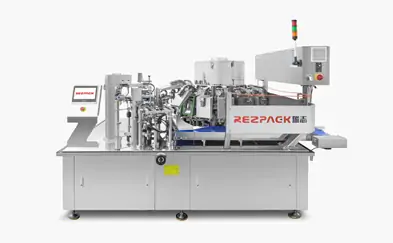
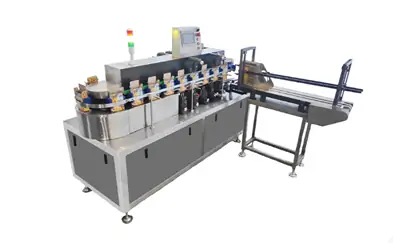
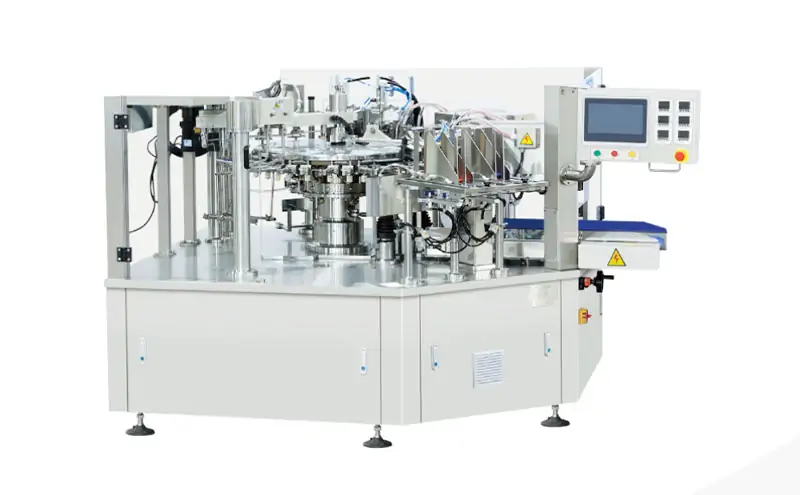
| Bag Width Range | 80-240 mm | Weight | 1500 kg |
| Bag Length Range | 150-370 mm | Total power | 3.02 kw |
| Filling weight | ≤ 1500g | Compress air | ≥ 0.4 m³/min |
| Max Speed | ≤ 60 bags/min | Dimensions | 1860 mm*1520 mm*1550 mm |


Picture this: you’ve just landed a major contract to pack granola into stand-up pouches with a tamper-evident zipper. Your current machine is either too slow, too manual, or tears the delicate matte film on every third cycle. You start searching for a “rotary premade pouch fill seal machine,” and within an hour, you’re drowning in spec sheets—some boasting 40 bags per minute, others 120. But faster isn’t always better, and a low sticker price can hide massive downtime costs.
This guide is built from real conversations with contract packagers and food manufacturers. It’s not about pushing a single spec; it’s about understanding the trade-offs so you can choose a machine that fits your pouch materials, product type, and production floor reality. We’ll touch on what actually matters: bag gripping technology, changeover logic, and hidden automation features—and by the end, you’ll have a clear checklist to bring to any supplier conversation.
Most spec sheets list a “bag width range.” What they often omit is how many physical change parts you need—and how much time it takes to swap them. A machine might technically handle a 100 mm to 200 mm wide pouch, but if you need to replace grippers, guide rails, and sealing jaws every time you shift from a small coffee pouch to a large detergent refill, your OEE will suffer.
Ask suppliers these three questions:
Can I run a flat-bottom pouch and a stand-up pouch on the same set of grippers?
How many quick-release change parts are involved for a full-width transition?
What’s the average tool-free adjustment time recorded from actual customer sites?
One area often overlooked is the interaction between the bag opener and the product fill zone. For dusty products like protein powder or fine spices, a poorly sealed fill zone leads to product buildup on sealing jaws, causing leaks. Look for systems that offer a physical separation between the fill station and the sealing station, ideally with a positive dust extraction port. This isn’t a luxury in food packing; it’s a necessity for consistent hermetic seals.
A machine that runs 100 bags per minute with a pristine, rigid pouch can drop to 40 bpm when you introduce a thin, glossy recycled film that clings to the opening guides. True speed depends on the bag placer technology. Rotary machines with servo-driven, dual-pick vacuum grippers can compensate for film variability far better than mechanical cam-driven placers. They can also gently pick up a bag with a vacuum surge protection logic that prevents double-bagging without crushing the pouch.
What’s even more telling is the sustained speed over a 7-hour shift, including operator breaks and film splices. One co-packer we interviewed reduced their average speed from a claimed 80 bpm to a real 52 bpm once they accounted for splice stops and zipper verification jams. That 35% drop is where your margin erodes. When evaluating a machine, request a data log from a similar application showing bags-per-minute over an entire shift, not just a 20-minute demo video.
Here’s a framework to map your needs:
| Automation Tier | Description | Best For |
|---|---|---|
| Semi-Automatic | The operator manually places each bag onto a loading station; the machine fills and seals. | Startups, short runs, frequent product changes |
| Automatic Pick & Place | The machine picks bags from a magazine, opens, fills, and seals them. | Dedicated lines, runs of 5,000+ pouches per day |
| Integrated Quality Control | Includes checkweigher feedback, no-bag-no-fill sensors, seal integrity inspection, and automatic reject station. | Food safety compliance, retail-ready packaging |
| Full-Line Integration | Robot case packing, serialisation, and remote diagnostics are built into the control system. | 24/7 high-volume operations seeking traceability |
For many mid-tier food brands, the sweet spot is an automatic pick-and-place machine with an integrated checkweigher and a seal cooling zone. The cooling zone is critical: without it, still-warm seals can open under product weight as pouches drop into a collection bin, especially with heavy products like wet pet food. If you’ve ever faced mysterious leaks only during the summer months, a missing or undersized cooling section was often the culprit. You can explore an example of a high-speed configuration that includes independent seal cooling to see how this is implemented mechanically.
The vast majority of seal defects trace back to a mismatch between the machine’s heat-sealing profile and the film’s structure. A machine optimised for PE/PE recyclable films requires precise, dual-pulse heat control because PE has a narrow sealing window—too hot and it puckers, too cold and it peels. On the other hand, a PET/Alu/PE laminate is more forgiving.
Before you buy, run a material trial with your actual film rolls—not the supplier’s perfectly conditioned sample pouch. Provide the machine builder with the COF (coefficient of friction) data of your film’s outer layer; this determines whether the bag magazine can separate the top pouch reliably. If the COF is too high (tacky matte finish) or too low (high-slip glossy), you may need an auxiliary bag separation system. Get specific guidance on material handling options that include adjustable vacuum and air-knife assist for tricky films.
The shift to mono-PP or mono-PE pouches is accelerating due to retailer mandates and EPR fees. These materials, however, are less stiff and more heat-sensitive. A machine with 8 or 10 stations allows you to add a long-dwell-time sealing station, which is practically mandatory for high-integrity mono-PE seals. The extra station also lets you insert a nitrogen flush or gas-flushing dwell after the initial fill, which is crucial for extending shelf life in flexible packaging without a rigid can.
In a recent retrofit project for a snack brand transitioning to mono-PP, the ability to individually adjust seal jaw temperature and pressure across four sequential stations was the deciding factor. Machines with only a single sealing station couldn’t achieve the required 90 kPa burst strength consistently. When you’re planning a line for recyclable pouches, prioritise station count and independent jaw control over nominal speed.
Food facilities need washdown capability, but “full stainless steel” often applies only to the frame and cover panels. The real maintenance headache lives in the rotary indexing mechanism and the cam followers. Look for an automatic centralised lubrication system that feeds multiple grease points without opening the guard door. If the machine uses oil-impregnated bronze bushings in the bag placer arms, confirm the replacement interval and whether it’s a field-serviceable task or requires a service visit.
Wiring matters, too. In wet environments, cables inside the electrical cabinet should have IP65-rated connectors, not just cable glands. This prevents water ingress when the machine is foamed during sanitation shifts. If you have multiple product changeovers daily, a recipe-driven control system that recalls all servo positions, temperatures, and vacuum timers from a single HMI screen isn’t a convenience—it’s a huge reduction in setup errors.
By now, you realise that a “right rotary premade pouch fill seal machine” is the one that handles your specific film, product, and throughput with minimal hidden labour. The core of a good decision comes down to running your product on the machine, with your bags, and asking for shift-long data logs, not just demo videos. If you want to see how a machine that ticks these boxes handles in a production setting, review the detailed specifications of one such system and compare it against your checklist. For a smoother evaluation process, you can also request an application-specific trial directly from REZPACK’s engineering team.
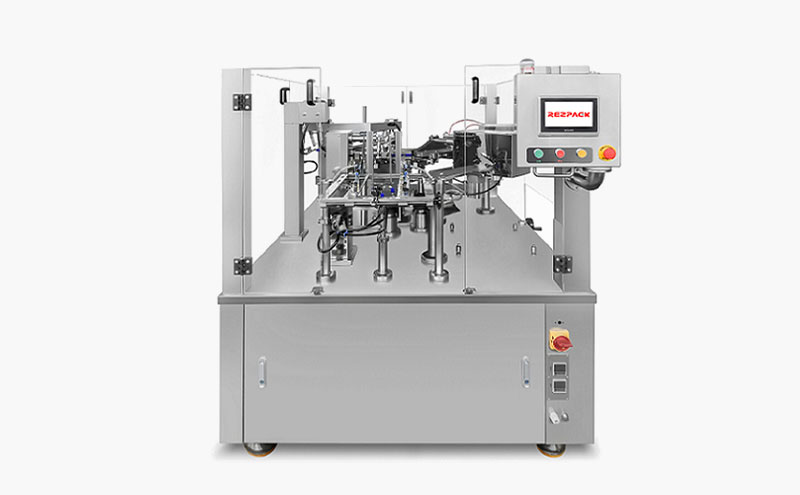
| Bag Width Range | 80-240 mm | Weight | 1500 kg |
| Bag Length Range | 150-370 mm | Total power | 3.02 kw |
| Filling weight | ≤ 1500g | Compress air | ≥ 0.4 m³/min |
| Max Speed | ≤ 60 bags/min | Dimensions | 1860 mm*1520 mm*1550 mm |
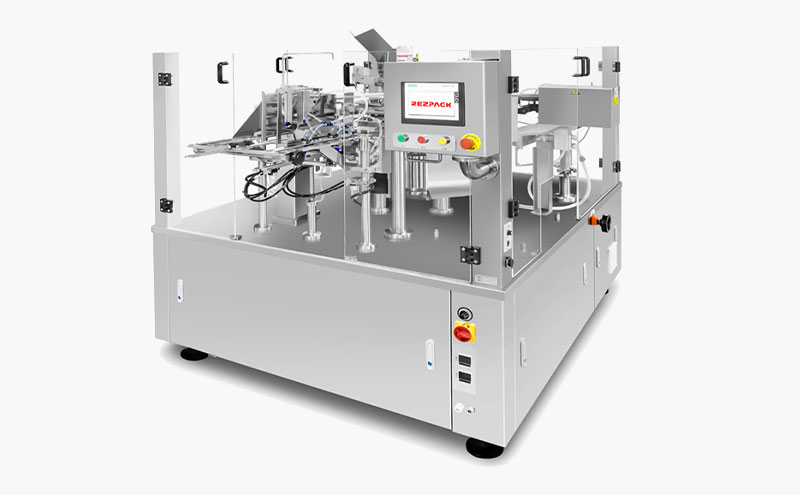
| Bag Width Range | 180-300 mm | Weight | 1800 kg |
| Bag Length Range | 150-450 mm | Total power | 3.62 kw |
| Filling weight | ≤ 2500 g | Compress air | ≥ 0.4 m³/min |
| Max Speed | ≤ 50 bags/min | Dimensions | 2080 mm*1720 mm*1650mm |
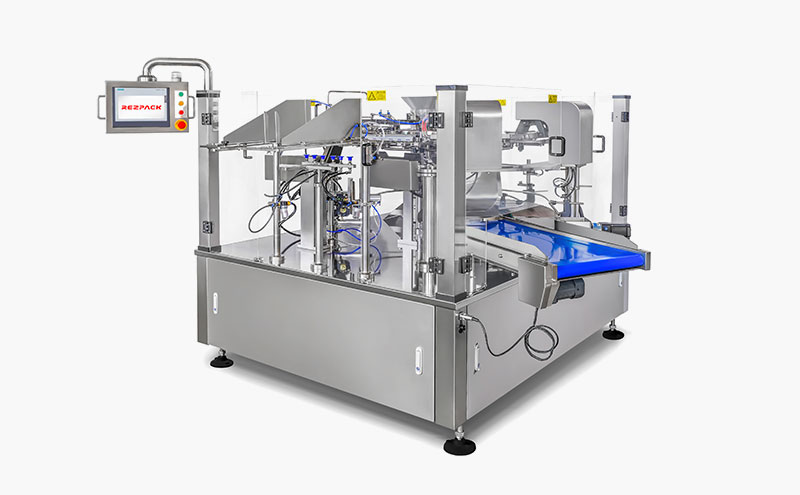
| Bag Width Range | 270-400 mm | Weight | 2500 kg |
| Bag Length Range | 150-600 mm | Total power | 3.62 kw |
| Filling Range | ≤ 5000g | Compress air | ≥ 0.4 m³/min |
| Max Speed | ≤ 30 bags/min | Dimensions | 2150 mm*2020 mm*1700 mm |