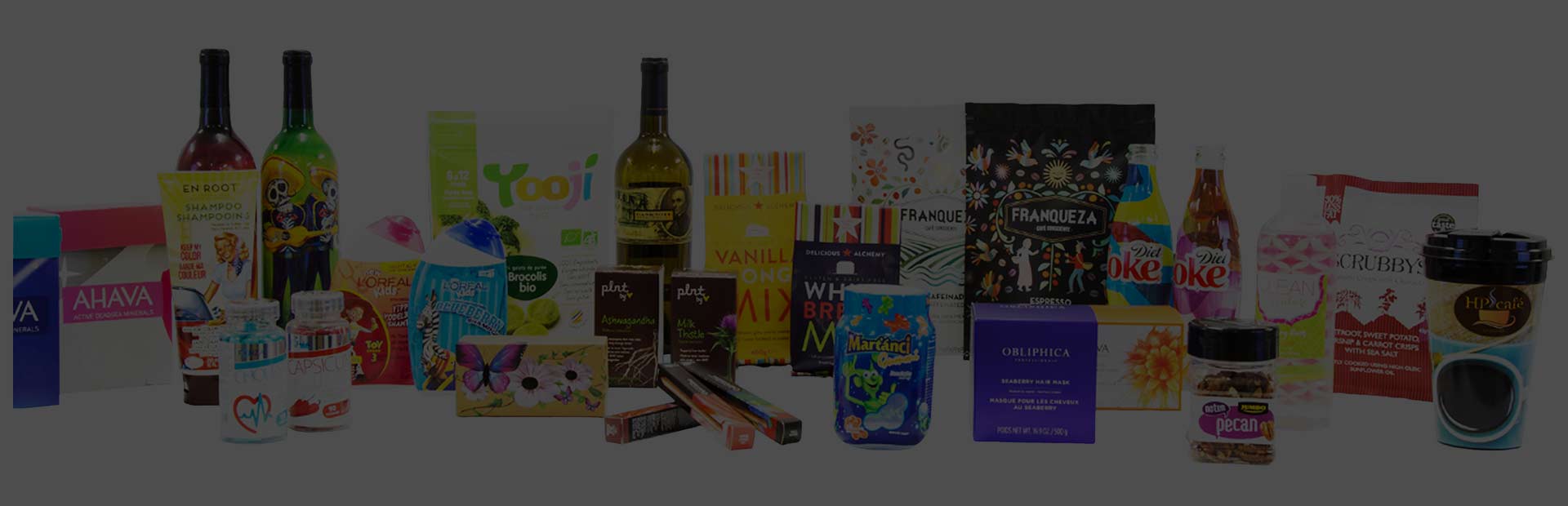
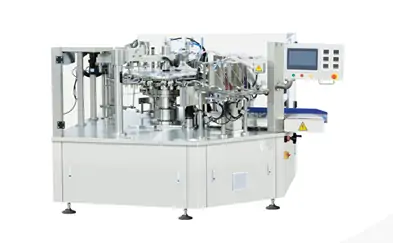
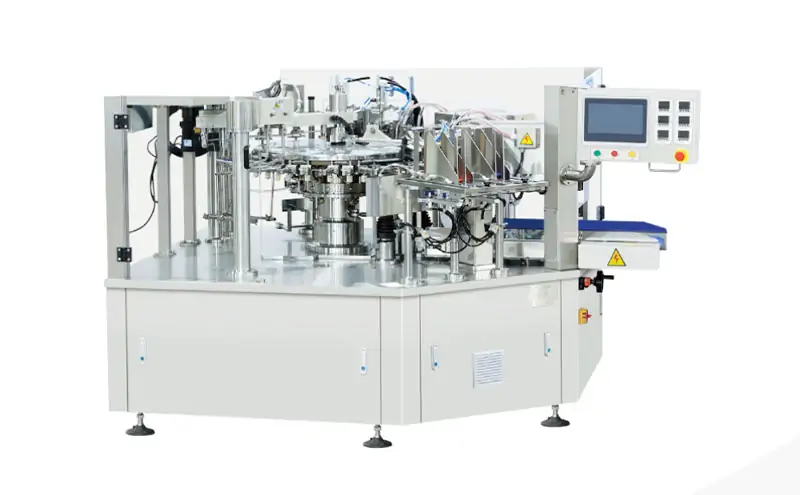
Sachet Form Fill Seal (FFS) machines are designed for high-efficiency packaging of small, portion-sized products, providing both flexibility and accuracy in production. This packaging style is widely used for products that require controlled portions, extended freshness, and a sleek presentation.

What is Sachet Form Fill Seal Packaging?

Sachet Form Fill Seal machines create, fill, and seal sachets or small pouches in one seamless process. These sachets are often used for tea, coffee, spices, powders, granules, and liquid products, ensuring accurate dosing and maintaining product freshness.

Rezpack’s Sachet FFS Machines offer cutting-edge technology to create high-quality packaging solutions, including specialized designs such as three-dimensional pyramid tea bags, which enhance functionality and appeal.

Key Features of Sachet Form Fill Seal Machines

1.Versatility in Sachet Design

●Supports various sachet styles such as flat sachets or three-dimensional pyramid tea bags.

●Suitable for powders, liquids, granules, and even delicate products like tea leaves.

2.Precision Filling Systems

●Equipped with auger fillers, volumetric fillers, or liquid pumps for precise dosing.

●Ensures consistency in weight and minimizes material waste.

3.High-Speed Performance

●Capable of producing up to 120 sachets per minute, ideal for high-volume production lines.

●Stable operation with minimal downtime.

4.Hygienic and Food-Safe Construction

●Constructed with SUS304 stainless steel, compliant with GMP standards.

●Easy-to-clean design ensures sanitation and safety.

5.Advanced Sealing Technology

●Airtight sealing to maintain freshness and aroma.

●Special sealing for pyramid sachets ensures durability and aesthetics.

6.Customizable Options

●Options for tag and string attachment for tea sachets.

7.User-Friendly Operation

●Intuitive HMI touch screen control for easy parameter adjustment.

●Minimal setup time for different sachet sizes and products.

Applications of Sachet Form Fill Seal Machines

Sachet FFS machines are ideal for a wide range of industries, including:

Tea & Coffee: Pyramid tea bags, instant coffee sachets.

Spices & Seasonings: Sugar, salt, pepper, powdered seasonings.

Pharmaceuticals: Single-dose medicines or supplements.

Liquid Products: Shampoo, lotion, sauces, or juices.

Case Study: Pyramid Tea Bags

Rezpack’s Sachet FFS Machine recently demonstrated its capabilities by packaging pyramid tea bags for a premium tea brand.

Product: Loose tea leaves and flowers.

Packaging Style: Transparent triangular sachets with a string and tag.

●Features:

●Gentle filling to prevent leaf breakage.

●Airtight sealing to preserve aroma and freshness.

●High-speed operation, producing 60 pyramid bags per minute.

The pyramid shape not only provided an elegant appearance but also allowed the tea to steep more effectively, enhancing the customer’s brewing experience.

Advantages of Sachet Form Fill Seal Packaging

1.Cost-Effective Production

●Automates the entire process, reducing labor costs.

●Precise filling minimizes product waste.

2.Enhanced Product Presentation

●Unique sachet designs like pyramid tea bags stand out on the shelf.

●Transparent materials allow customers to see the product quality.

3.Improved Shelf Life

●Airtight sealing and optional nitrogen flushing protect product freshness.

4.Sustainability

●Compatible with eco-friendly packaging materials for a greener footprint.

5.Convenience for End Users

●Single-use sachets offer portability and controlled portions.

Conclusion

Sachet Form Fill Seal Machines are the ultimate solution for creating high-quality, convenient, and visually appealing packaging. Rezpack’s advanced technology ensures precision, efficiency, and reliability, making these machines ideal for businesses aiming to elevate their product packaging.

From pyramid tea bags to single-serve sachets, Rezpack delivers innovative solutions to meet the unique needs of your industry.

Transform your packaging process with Sachet Form Fill Seal Machines today!
Inquire Now
Recent Post
img

In the fast-paced world of manufacturing and packaging, efficiency, versatility, and cost-effectiveness are the cornerstones of a successful operation. For businesses across industries—from food and pharmaceuticals to chemicals and snacks—a Vertical Form-Fill-Seal (VFFS) packaging system has emerged as a game-changing solution. But what exactly makes VFFS systems stand out? Below, we break down the core benefits of using a VFFS packaging system into three key categories, helping you understand why it’s a smart investment for your production line.

1. Operational Efficiency & Seamless Integration

The primary advantage of a VFFS packaging system lies in its ability to boost operational efficiency and integrate seamlessly into existing production workflows. VFFS systems operate at high speeds, automating the entire process of forming, filling, and sealing packages in one seamless workflow—eliminating bottlenecks and increasing throughput, which is critical for large-scale, high-volume production. Additionally, these systems are designed to integrate effortlessly with other production line equipment, such as conveyors, metal detectors, weight checkers, or inspection systems, creating a fully automated, streamlined process that reduces manual intervention and minimizes downtime. Their compact design is another efficiency-boosting feature: VFFS systems take up minimal floor space compared to other packaging methods, allowing businesses to optimize workflow layout and make the most of limited facility space—perfect for small to medium-sized factories.

2. Versatility & Quality Control

VFFS packaging systems excel in versatility and consistent quality control, making them adaptable to diverse industry needs. They can handle a wide range of products—including powders, liquids, granular items, snacks, and small solid products—with easy adjustments to accommodate different product types, package sizes, and shapes (from standard pouches to stand-up bags). This eliminates the need for multiple specialized machines, making VFFS ideal for industries like food, pharmaceuticals, and chemicals. Beyond versatility, VFFS systems ensure consistent, high-quality output: precise measurement and filling capabilities minimize product and material waste, while high-quality seals preserve product freshness, extend shelf life, and prevent contaminants from entering packages. Every package maintains uniform formation, filling levels, and seal strength, helping businesses maintain strict quality control and build a reputation for reliability.

3. Cost-Effectiveness & Market Adaptability

A VFFS packaging system delivers long-term cost savings and the flexibility to adapt to market demands, making it a cost-effective investment for businesses of all sizes. While the initial investment may be significant, VFFS systems offer a strong return on investment (ROI) thanks to reduced labor costs (automating tasks eliminates the need for a large manual team and minimizes human error), minimal product waste, and often the elimination of secondary packaging. Additionally, VFFS machines support full packaging customization—from size and shape to printing options (branding logos, expiration dates, barcodes, or nutritional information). This flexibility lets businesses tailor their packaging to meet specific customer preferences, market trends, and regulatory requirements, giving them a competitive edge in today’s crowded market. For businesses looking to balance upfront costs with long-term savings and market adaptability, VFFS systems are an ideal choice.

Why Choose a VFFS Packaging System?

From operational efficiency and versatile performance to cost savings and market adaptability, a VFFS packaging system offers comprehensive benefits that cater to businesses across industries. Whether you’re looking to scale production, reduce costs, improve product quality, or stay competitive, VFFS systems are a versatile, reliable solution that delivers long-term value. Want to get more professional industry advice on the VFFS system? Contact REPACK now!

img

Rotary premade pouch machines are the gold standard for automated flexible packaging in industrial production, designed to fill and seal preformed pouches (stand-up pouches, zipper pouches, spout pouches, flat pouches, etc.). Their rotary mechanical design and integrated automation deliver a suite of competitive advantages that align with the high-efficiency, flexible, and high-quality packaging needs of food, beverage, cosmetics, chemicals, and pharmaceutical industries—core demands for global B2B manufacturing and packaging buyers. Below are their key benefits, tailored to industrial production and international market requirements:

1. Exceptionally High Production Efficiency

The rotary turret structure enables continuous, synchronous operation of all workstations (pouch feeding, opening, filling, sealing, coding, discharge, etc.). Unlike reciprocating premade pouch machines (which have intermittent motion), rotary models eliminate idle time between process steps, achieving higher output speeds (typically 80–250 pouches per minute, depending on pouch size and material). For large-scale industrial production, this directly translates to higher throughput and lower unit packaging costs— a critical selling point for global manufacturers.

2. Versatile Pouch Compatibility

Rotary machines handle nearly all types of premade flexible pouches used in the global market, with minimal changeover:

  • Stand-up pouches (with/without zippers), spout pouches, flat pouches, quad-seal pouches, and eight-side seal pouches;
  • Laminated film pouches (PET/PE, AL/PE) for barrier protection, and food-grade compliant pouches (meeting FDA, EU, and other international standards). This versatility eliminates the need for multiple dedicated machines for different pouch formats, making it ideal for manufacturers with diverse product lines or custom packaging demands for overseas markets.

3. Precision & High Packaging Yield

The rigid rotary turret ensures stable, consistent positioning of pouches throughout the entire process, with precise control over:

  • Pouch opening (via vacuum suction, no misalignment or failure to open);
  • Filling accuracy (compatible with volumetric, weighing, piston, and liquid filling systems, with error rates <1%);
  • Sealing pressure/temperature (uniform heat sealing across the pouch seal edge). This precision reduces waste from leaky seals, under- or over-filling, or damaged pouches, boosting the first-pass yield to over 99% in most cases—critical for reducing material waste and production losses, especially for high-value products (e.g., pharmaceuticals, premium food, cosmetics).

4. Fast Changeover for Flexible Production

Most modern rotary premade pouch machines feature a modular design with quick-release parts (pouch holders, filling nozzles, sealing dies) and digital parameter storage. Changing over for different pouch sizes (width/length) or formats takes only 10–30 minutes (no complex mechanical adjustments), supporting small-batch, multi-variety production—a growing demand in the global market as brands shift to customized, niche packaging for regional markets.

5. High Automation & Integrated Production

Rotary machines are easily integrated with auxiliary equipment to create a one-stop automated packaging line:

  • Filling systems: for powder, granules, liquid, paste, mixed materials;
  • Coding/labeling: QR codes, batch numbers, expiry dates;
  • Quality inspection: seal integrity, weight check, metal detection);
  • Case packing/palletizing. This reduces manual intervention, lowers labor costs (a key advantage for regions with high labor costs, such as Europe, North America, and Australia), and minimizes human error in the packaging process.

6. Superior Seal Quality & Product Shelf Life

The rotary design delivers uniform pressure and heat distribution across the seal area, creating a strong, airtight, and moisture-proof seal—even for thick laminated pouches or pouches with zippers/spouts. A reliable seal prevents product spoilage, contamination, or leakage during international shipping and storage, extending product shelf life and reducing returns/complaints for exporters. All contact parts are made of food-grade 304/316 stainless steel, complying with global food safety and hygiene standards (FDA, CE, HACCP).

7. Compact Footprint & Space Efficiency

The rotary turret’s vertical, circular layout consolidates all workstations into a small footprint—30–50% less floor space than linear premade pouch machines of the same output. This is a major benefit for manufacturers with limited factory space (common in urban industrial areas of Europe, Asia, and North America) and simplifies factory layout and line integration.

8. Stable Operation & Low Maintenance Costs

Rotary machines feature a robust, precision-machined mechanical structure with fewer moving parts than reciprocating models, reducing wear and tear and lowering the risk of breakdowns. Most key components (bearings, motors, sensors) are international standard parts (e.g., Siemens, SMC, Omron) that are easily sourced globally—critical for overseas customers, who require convenient after-sales service and spare parts availability. Routine maintenance is simple (e.g., lubrication, filter replacement), with minimal downtime for repairs.

9. Wide Material Compatibility

Beyond pouch versatility, these machines handle all types of packaging materials for premade pouches, including plastic laminates, aluminum foil laminates, and biodegradable/compostable films (a fast-growing trend in the EU, North America, and other eco-conscious markets). This aligns with global sustainability regulations and brand ESG goals, making rotary machines a future-proof investment for international manufacturers.

10. Energy Efficiency

The continuous rotary motion has higher transmission efficiency than the start-stop motion of reciprocating machines, reducing energy consumption per unit output (typically 15–20% lower energy use). This lowers long-term production costs and meets the energy-saving and emission-reduction requirements of global industrial policies (e.g., the EU’s Energy Efficiency Directive).

Summary

For global B2B manufacturers and packaging solution providers, the core value of rotary premade pouch machines lies in their combination of high efficiency, flexibility, precision, and reliability—all while complying with international safety, sustainability, and quality standards. Their ability to support large-scale production and adapt to diverse regional packaging demands makes them the preferred choice for exporters and multinational brands looking to optimize their packaging lines for the global market.

img

 Understanding how Vertical Form Fill Seal (VFFS) packaging machines work is key to maximizing throughput, minimizing material waste, and elevating your line’s ROI. VFFS machines integrate three core tasks—forming bags from rollstock film, filling with product, and sealing the pouch—into a single automated vertical workflow, ideal for high-volume production of snacks, grains, powders, liquids, and frozen goods.

Core Working Steps of a VFFS Packaging Machine 

1. Rollstock Film Unwinding & Tension Control

The VFFS process starts with rollstock film unwinding—a spool of flexible film (polyethylene, laminates, foil, or barrier films) is loaded onto the machine’s unwind station. Servo-driven brakes and edge position control (EPC) sensors maintain consistent film tension and alignment, preventing skewing or tearing that causes material waste. For pre-printed packaging, registration sensors align graphics perfectly on each bag, eliminating rejected pouches and boosting brand consistency.

2. Film Forming: Creating a Vertical Tube

The guided film passes over a forming collar/shoulder and wraps around a central forming tube, shaping into a continuous vertical tube. Pull-down belts or sealing jaws feed the film downward at a synchronized speed—adjustable for different bag sizes (no need for costly tooling changes for small batch runs). This step’s automation cuts labor costs and ensures uniform bag dimensions across production runs.

3. Vertical Sealing: Securing the Side Seam

Heated vertical sealing bars clamp the overlapping edges of the film tube, melting and bonding them into a durable longitudinal seam (options: fin seal, lap seal, or pillow seal). The seal temperature and pressure are calibrated to the film type, preventing leaks that risk product spoilage and recall. This precision reduces post-packaging waste and protects your product’s shelf life.

4. Product Filling: Accurate Dosing for ROI

Pre-measured product is dosed into the film tube through the central forming tube—integrated filling systems are tailored to product type:

  • Multi-head weighers for granules (snacks, grains)
  • Auger fillers for powders (flour, coffee)
  • Liquid pumps for sauces, oils
  • Volumetric cups for uniform portioning

Timing is critical: filling starts after the bottom seal forms and stops before the top seal closes, eliminating product spillage (a major source of waste). Accurate dosing reduces product giveaway, directly improving your line’s ROI.

5. Horizontal Sealing & Cutting

Heated horizontal sealing jaws perform two key actions at once:

  1. Seal the top of the current bag and the bottom of the next bag (eliminates gap between pouches, cutting material waste)
  2. Cut the film tube between the two seals to separate finished pouches

VFFS machines use two motion types for this step—critical for buyers researching speed options:

  • Intermittent motion VFFS: Jaws stop to seal; ideal for fragile products (e.g., chips) at 80–120 bags/min
  • Continuous motion VFFS: Jaws move with the film; high-speed for uniform goods (e.g., rice) at 100–300+ bags/min

Optional nitrogen gas flushing can be added here to displace air, extending product shelf life by 2–3x (a top-selling point for food manufacturers).

6. Bag Discharge & Downstream Integration 

Finished sealed pouches drop onto a conveyor belt, which feeds them to downstream equipment (checkweighers, X-ray inspectors, case packers, or cartoners). VFFS machines integrate seamlessly with existing production lines, reducing manual handling and line bottlenecks.

Key VFFS Components

Component Function Core Benefit (Tied to ROI/Waste Reduction)
Forming Tube Shapes film into a tube Adjusts for bag sizes 5–50cm wide; no costly tooling swaps
Servo Drives & Sensors Syncs all machine motions 99.9% seal accuracy; cuts rejected bags by 80%
Horizontal Sealing Jaws Seals and cuts film Dual-action design boosts throughput by 30% vs standalone machines
Gas Flushing System Displaces air in bags Extends product shelf life; reduces spoilage costs

Why VFFS Machines Are a Top Choice for High-Volume Packaging 

For factory decision-makers, VFFS machines deliver three unbeatable advantages that rank high in Google search queries:

  1. Automation Reduces Labor Costs: Eliminates manual bagging, sealing, and trimming—cuts staffing needs by 2–3 people per shift.
  2. Minimal Material Waste: Precision tension control and alignment reduce film scrap by 15–20% vs manual or semi-automatic systems.
  3. Flexibility for Multi-Product Lines: Switch between bag sizes and product types in <10 minutes; ideal for contract packaging businesses.
img

Anyone who’s worked in manufacturing knows that packaging isn’t just about wrapping a product—it’s about preserving quality, streamlining operations, and keeping up with customer demands. The Rotary Packing Machine has become a workhorse for businesses across sectors, and for good reason: it’s not just another piece of equipment, but a flexible solution that adapts to how different industries operate. Unlike rigid packaging machines that force you to adjust your products to fit their limits, this rotary pouch system bends to your needs—handling everything from tiny granules to thick sauces, and every pouch style in between.

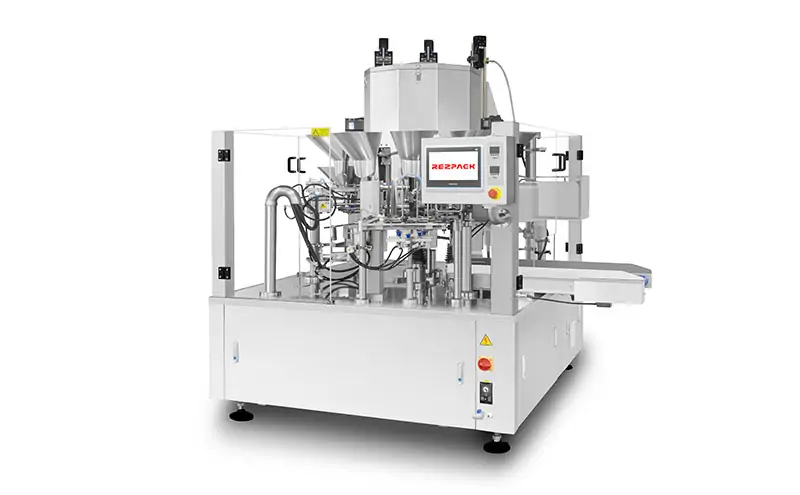
At its heart, the Rotary Packing Machine is built for versatility. It works with standup pouches, zipper bags, spout pouches, and gusset bags, and can handle filling weights from a few grams up to 5 kilograms—all while hitting speeds that keep production lines moving (some configurations top out at 130 bags per minute). But what really makes it indispensable is how it solves industry-specific pain points. Below, we break down how it transforms packaging for four core sectors, with insights from decades of experience in the field.

Solid & Granular Products – Flexibility for Mixed SKUs and Gentle Handling

Solid and granular products span a huge range—from delicate treats to durable hardware—and the biggest headache for manufacturers is juggling multiple SKUs without slowing down. A machine that can’t switch between bag sizes or product types quickly ends up being a bottleneck. The Rotary Packing Machine fixes this with its touchscreen-controlled settings, which let you store dozens of bag configurations and swap between them in minutes. No more manually adjusting clamps or recalibrating for every new product—just select your setup and go.

For food-grade solids and granules, hygiene is non-negotiable. That’s why top-tier models like REZPACK’s Rotary Packing Machine use SUS304 stainless steel for all product-contact parts, ensuring compliance with food safety standards and easy cleaning between runs. The no-fill/no-seal alarm system is another game-changer: it stops the machine if a pouch is missing or doesn’t open properly, cutting down on waste that eats into profits. Whether you’re packaging small, fragile items that need gentle handling or bulkier granular goods that require consistent filling, this machine’s multi-station design balances speed with care—no broken products, no inconsistent weights.

Space is also a premium in most factories, and this rotary pouch machine’s compact footprint means it fits into existing lines without requiring a full overhaul. For businesses that produce multiple product lines, this eliminates the need for separate machines for each item, saving both money and floor space.

Liquid & Sauce Products – Leak-Proof Sealing and Viscosity Adaptability

Liquids and sauces are some of the trickiest products to package. Too loose a seal, and you’re dealing with leaks and spoiled inventory; too slow a filling process, and you can’t keep up with demand. The Rotary Packing Machine is engineered to tackle these issues head-on, with features specifically designed for fluid products.

Viscosity is a big variable—thin juices behave nothing like thick pastes—but this machine adapts. It comes with specialized liquid fillers that handle everything from runny beverages to heavy sauces, and foam prevention technology that stops frothy products from overflowing. The dual heat-sealing stations are a standout: first, a mesh or straight-line seal locks in the product, then cold presses smooth the seal to prevent wrinkles and ensure it’s airtight. For products that need to stay fresh longer, you can add nitrogen filling or vacuum sealing capabilities, which push out oxygen and slow spoilage.

REZPACK’s Rotary Packing Machine goes the extra mile with an oil-free vacuum pump, so there’s no risk of oil contaminating your products—a critical detail for food and beverage brands. It also works seamlessly with spout pouches and self-sealing zipper bags, with built-in zipper opener and closer functions that make packaging resealable products a breeze. For liquid manufacturers, this means less waste, longer shelf life, and happier customers who don’t have to deal with leaky packages.

Powder Products – Dust Control and Precision Filling

Powder products—whether they’re food seasonings, cleaning agents, or industrial chemicals—come with two major challenges: dust and consistency. Fine powders can escape during filling, creating safety hazards and wasting product, while uneven filling leads to customer complaints and regulatory issues. The Rotary Packing Machine addresses both with smart design choices that prioritize control.

Enclosed filling stations and air-exhausting features trap dust, keeping workspaces clean and protecting employees from respiratory risks. For powders that clump or have poor flowability, optional anti-blocking devices ensure a steady stream of product, so every pouch gets the exact weight specified. Precision is key here, and the machine’s integration with multihead weighers delivers accuracy within tight tolerances—essential for regulated industries where product weight is a compliance requirement.

Cleaning is another hassle with powder products, but this rotary pouch machine’s wipe-down structure and easy-to-disassemble components make sanitization quick and thorough. No more spending hours scrubbing hard-to-reach crevices—just take apart the filling station, wipe it down, and get back to production. REZPACK’s focus on durability also means the machine can handle the abrasive nature of some powders without wearing down, ensuring long-term reliability.

Specialty & Mixed-Media Products – Customization for Unique Needs

Specialty products—think cosmetics, personal care items, and industrial components—often don’t fit into standard packaging molds. They might use unconventional pouch shapes, require multi-component filling, or need extra protection during transit. The Rotary Packing Machine’s modular design makes it perfect for these use cases, as it can be customized to handle almost any specialty requirement.

For products with multiple components (like a liquid and a solid combined), the machine’s dual filling stations let you fill two materials sequentially or at the same time, cutting down on production steps. It works with shaped pouches, gusset bags (with side widths up to 50mm), and detachable pouches, giving brands the flexibility to create packaging that stands out on shelves. REZPACK’s 20 years of focusing on rotary packing machines has led to innovations like anti-collision features and grooved cams, which keep the machine stable even when handling heavy or irregularly shaped specialty products.

Data tracking is another big plus for specialty brands that need to maintain consistent quality. The machine’s data logging and fault alarm systems let you monitor production in real time, so you can spot issues like inconsistent filling or seal failures before they become major problems. This level of visibility helps protect your brand reputation and ensures every product meets your standards.

Why REZPACK’s Rotary Packing Machine Stands Out

Across all industries, the best packaging equipment is the one that works with your business—not against it. REZPACK has spent 33 years refining its Rotary Packing Machine, drawing on feedback from thousands of customers to build a system that’s reliable, customizable, and easy to use. Every machine undergoes rigorous testing before it leaves the factory, and the team offers on-site installation support and 24/7 technical assistance to make sure it integrates smoothly into your production line.

Whether you’re a small business looking to scale up or a large manufacturer needing to optimize efficiency, this machine adapts to your needs. It’s not just a tool—it’s a long-term investment that grows with your product line, saving you money on multiple machines and reducing downtime from changeovers.

Take the Next Step for Your Packaging

Ready to stop letting outdated packaging equipment hold you back? Whether you’re dealing with solids, liquids, powders, or specialty products, REZPACK’s Rotary Packing Machine has the flexibility and reliability to transform your operations. Reach out to REZPACK team today to discuss your specific needs, request a customized quote, or schedule a demo to see the machine in action.


[AI Content Contribution: ≤30%]

GET A QUOTE

+86 18989886089

GET IN TOUCH NOW
Captcha Code
×
We value your privacy
We use cookies to provide you with a better online experience, analyse and measure website usage, and assist in our marketing efforts.
Accept All