


 English
 Pусский
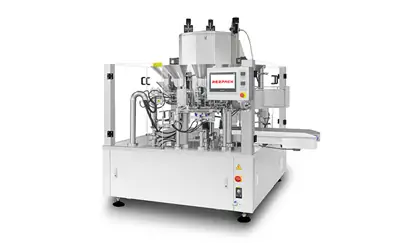
| Bag Width Range | 80-240 mm | Weight | 1500 kg |
| Bag Length Range | 150-370 mm | Total power | 3.02 kw |
| Filling weight | ≤ 1500g | Compress air | ≥ 0.4 m³/min |
| Max Speed | ≤ 60 bags/min | Dimensions | 1860 mm*1520 mm*1550 mm |


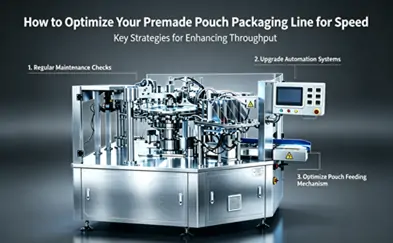
A premade pouch packaging line rated for a certain number of pouches per minute rarely delivers that figure consistently across an entire shift. The gap between the theoretical maximum and actual daily output is rarely a single bottleneck. It accumulates from brief stops at the infeed, from fill stations that wait for product, from seal bars that run a fraction of a second longer than necessary, and from changeovers that drift past the scheduled duration. Closing that gap is not about running the machine faster – it is about identifying and reducing the small losses that compound over thousands of cycles.
This article examines five areas where packaging lines lose speed and provides practical adjustments that help converters and co‑packers bring actual output closer to the machine’s capability.
A common starting point is to focus on the filling‑sealing machine itself while overlooking the equipment that feeds it and the conveyors that take pouches away. If the pouch magazine empties faster than the operator can reload it, or if the check‑weigher downstream pauses briefly between cycles, the filler will spend a portion of every hour idle – not because it is slow, but because it is waiting.
The first step in any speed‑optimisation exercise is to measure the actual cycle time of every piece of equipment around the filler. This includes the pouch‑feeding conveyor or magazine, the fill system (auger, piston, volumetric cup, or multi‑head weigher), the nitrogen flush or vacuum system if present, and the discharge conveyor. Wherever one machine runs at a different pace from the next, either the faster machine must be slowed to match, or the slower machine must be upgraded or adjusted.
If the filler is capable of 60 pouches per minute but the multi‑head weigher above it can only deliver 52 cycles, the line runs at 52. In that scenario, the filler is not the constraint – the weigher is. Resources directed at speeding up the filler would yield no additional output.
Premade pouches arrive from the supplier in a stacked condition and must be picked, opened, and placed onto the grippers. Any inconsistency in the stack – pouches that are slightly stuck together, that have a high static charge, or that vary in thickness – can cause the pick‑and‑place system to miss a cycle. A missed pouch at the infeed is a lost production opportunity that cannot be recovered later.
Several adjustments can improve infeed reliability:
Pouch conditioning. Allowing pouches to acclimate to the packaging room’s temperature and humidity for 24 hours before use reduces static and dimensional variation.
Magazine design. Some machines accept dual‑magazine feeds so that one stack can be replenished while the other is in use. If the current equipment only has a single magazine, adding a second magazine or a buffer conveyor can shorten operator reload time.
Air assist. A controlled puff of ionised air at the pick point can separate pouches that are clinging together and neutralise static that would otherwise make the pouch stick to the gripper.
For a rotary pouch filler with a servomotor‑driven infeed system, the infeed motion profile can often be tuned so that the pick‑and‑place arm accelerates and decelerates smoothly, reducing the incidence of dropped pouches at higher speeds.
The speed of the fill station is determined by both the product’s physical properties and the filling technology. Free‑flowing granules, such as sugar or dry pet food, can be dispensed quickly through a volumetric cup or multi‑head weigher. Sticky powders, irregular solids, or products that dust heavily require slower fill cycles and sometimes additional settling time.
Where the product allows, switching from a single‑stage fill to a two‑stage or bulk‑and‑dribble fill can shorten the cycle time. The bulk fill dispenses most of the target weight at high speed, and the dribble fill tops up the remaining few grams at a lower speed to hit the target accuracy. This approach is particularly effective when the product does not fluidise well or when headroom inside the pouch is limited.
Another adjustment that sometimes yields gains is the nozzle design. A fill nozzle that is too narrow for the product creates bridging; a nozzle that is too wide can cause product to splash or dust, requiring slower actuation. Matching the nozzle diameter and shape to the product’s flow characteristics allows the fill to complete in fewer seconds per pouch.
Seal bars that dwell for 0.2 seconds longer than necessary cost a line 12 seconds of lost production for every 60 pouches – roughly one extra pouch that could have been produced. Over an eight‑hour shift, those fractions add up to a meaningful loss of output.
The seal temperature, pressure, and dwell time must be set for the specific pouch material, thickness, and gusset construction. A common error is to run the seal bars hotter than required on the assumption that a stronger seal is safer. In reality, excess heat can distort the pouch film, create burn‑through on thin materials, and slow the cycle because the bars must part and cool slightly before the next pouch indexes into position.
The correct seal parameters are the lowest combination of temperature, pressure, and dwell that consistently produces a hermetic seal verified by a burst test or dye‑penetration test. Once these minimum values are established, operators can lock them into the recipe and avoid manual overrides that creep upward over time.
A packaging line that changes pouch sizes or product types several times per shift can lose a significant portion of its available production time to mechanical adjustments. Reducing changeover time directly increases the hours available for production – and this is often the lowest‑cost way to add capacity to an existing line.
Where possible, standardise on a common pouch width and gusset design across multiple products to reduce the need for guide‑rail and gripper adjustments. Use indexed scales or digital position indicators on adjustment points so that operators return to the same setting each time, rather than adjusting by trial and error. Quick‑release clamps and toolless fasteners on guard doors, fill nozzles, and seal bars can cut changeover time by half compared with bolt‑on components.
Some high‑speed pouch filling‑sealing lines support recipe‑based changeover, where the machine controller recalls stored positions for gripper width, fill volume, and seal parameters. This eliminates mechanical measurement and reduces the risk of misadjustment on the first few pouches after a changeover.
Gains made during a focused optimisation effort tend to erode if they are not embedded into standard operating procedures. The final step is to document the optimised settings for each product, train operators on the standard cycle, and add a daily check of the line’s actual speed against the baseline. Where deviations occur, the cause should be logged so that patterns become visible before they turn into chronic losses.
A packaging line that runs at its design speed for an entire shift is the exception rather than the norm, but lines that are systematically tuned – infeed, fill, seal, and changeover – routinely outperform those where speed is treated as a dial to be turned up. The difference is not in the machine’s maximum rating but in how small the gap is between that rating and the average speed across a production day.
For operations looking to raise output on their pouch filling equipment without sacrificing seal quality or fill accuracy, REZPACK’s high‑speed rotary pouch filling machines with servomotor infeed and dual‑bag capability are designed to reduce many of the cycle‑time losses described above. Evaluating current line data against the machine’s specifications can help quantify the potential gain before any capital commitment.
Production speed is a system property, not a machine setting. The adjustments above address the most common points where premade pouch lines lose time. Applied systematically, they can lift a line’s average output by 10% to 20% without changing the core equipment – simply by reducing the minutes and seconds that slip away in each cycle.
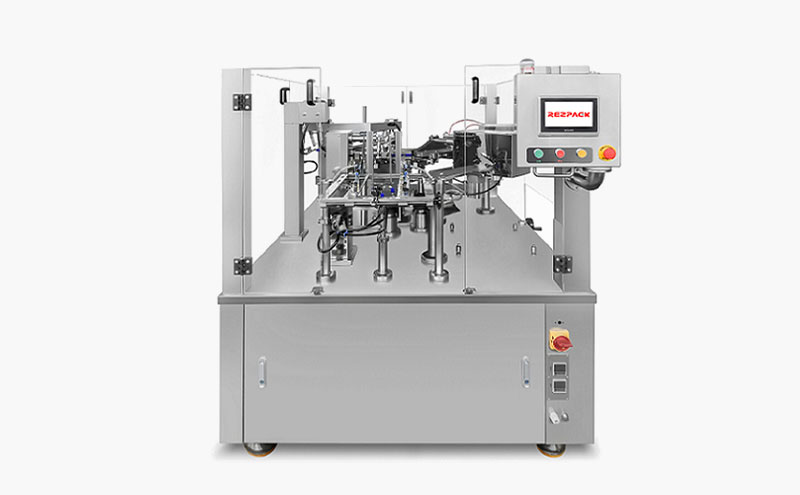
| Bag Width Range | 80-240 mm | Weight | 1500 kg |
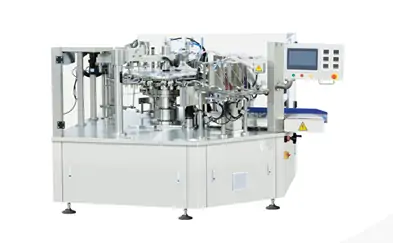
| Bag Length Range | 150-370 mm | Total power | 3.02 kw |
| Filling weight | ≤ 1500g | Compress air | ≥ 0.4 m³/min |
| Max Speed | ≤ 60 bags/min | Dimensions | 1860 mm*1520 mm*1550 mm |
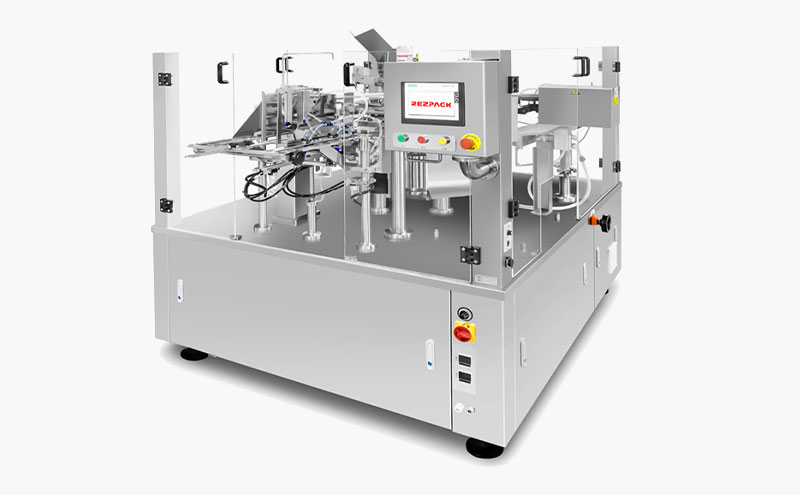
| Bag Width Range | 180-300 mm | Weight | 1800 kg |
| Bag Length Range | 150-450 mm | Total power | 3.62 kw |
| Filling weight | ≤ 2500 g | Compress air | ≥ 0.4 m³/min |
| Max Speed | ≤ 50 bags/min | Dimensions | 2080 mm*1720 mm*1650mm |
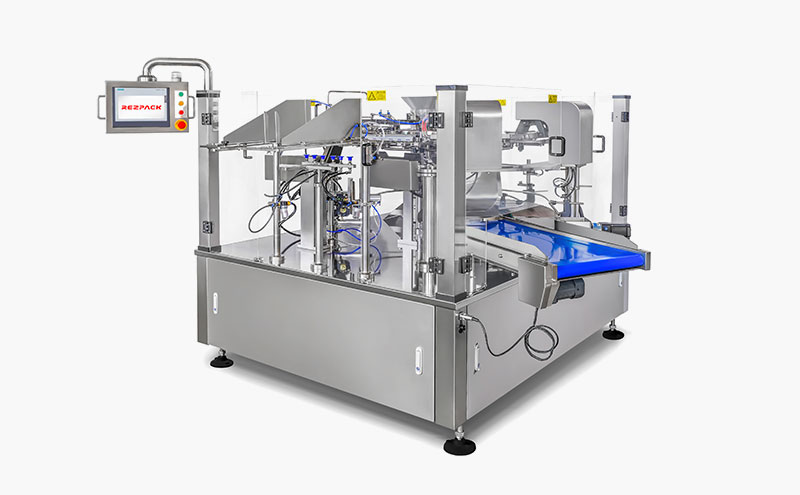
| Bag Width Range | 270-400 mm | Weight | 2500 kg |
| Bag Length Range | 150-600 mm | Total power | 3.62 kw |
| Filling Range | ≤ 5000g | Compress air | ≥ 0.4 m³/min |
| Max Speed | ≤ 30 bags/min | Dimensions | 2150 mm*2020 mm*1700 mm |