


 English
 Pусский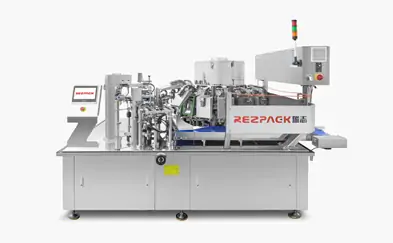
| Bag Width Range | 80-240 mm | Weight | 1500 kg |
| Bag Length Range | 150-370 mm | Total power | 3.02 kw |
| Filling weight | ≤ 1500g | Compress air | ≥ 0.4 m³/min |
| Max Speed | ≤ 60 bags/min | Dimensions | 1860 mm*1520 mm*1550 mm |


If you’ve ever watched a rotary pouch filling line in full swing, you’ll recognise the smooth, continuous motion: pouches get picked, opened, filled, sealed, and discharged in a few seconds. But when that rhythm breaks—leakers, torn gussets, or a misaligned zipper—it’s rarely obvious which station caused the failure. A clear understanding of how each station functions is your best diagnostic tool, and it’s also the first step when you need to select the right rotary premade pouch fill-seal machine for a new line or retrofit.
This guide breaks down the typical working sequence of a modern servo-driven rotary pick-fill-seal system, drawing on observations from co-packers handling everything from dusty protein powders to wet pet food. You’ll see what happens at every step, where things tend to go wrong, and which design features matter for consistent, high-integrity seals over long shifts.
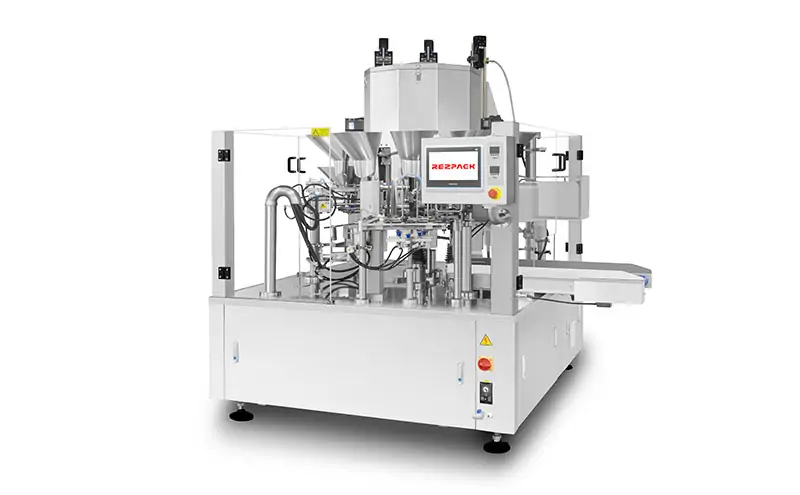
The process starts with a stack of flat premade pouches loaded into an inclined magazine. A servo-driven pick-and-place arm uses vacuum cups to lift the top pouch and transfer it to a pair of grippers fixed on the rotary indexing table.
Reliable singulation is the hidden challenge here. Static buildup, matte-finish tackiness, or simply the weight of a full stack can cause two pouches to stick together. More advanced systems counter this with an adjustable air knife that injects a jet of air between the top pouches during pickup, combined with a vacuum surge protection algorithm that prevents the cups from pulling a double layer. If you’re running thin, high-slip recyclable films, you may also need a mechanical separation finger that pre-opens the pouch edge before the vacuum engages. Machines that offer this level of pick control significantly reduce miss-picks when film properties vary from batch to batch, and you can explore a configuration built around servo-driven, multi-assist bag separation to see how these features integrate.
Once clamped, the pouch indexes to the opening station. A combination of blown air and opposing vacuum suction plates pulls the pouch faces apart. If the pouch has a press-to-close zipper or slider, a dedicated mechanism engages the zipper profile at this stage to make sure it’s fully separated. Without this step, the product can lodge in the zipper track and compromise the top seal later.
Also critical here is bottom support. Stand-up pouches and quad-seal bags need a bottom forming plate or a gentle mechanical push from below to unfold completely. A machine with an adjustable bottom support that handles different pouch heights without tools saves time and avoids underfilled, unstable packs.
The open pouch moves to the filling station, where an auger filler, volumetric cup, or multi-head weigher deposits the product through a descending funnel. For dusty products—protein powder, spices, fine chemicals—the area around this station must be physically isolated from the sealing stations further down the line.
When product dust drifts onto heated sealing jaws, it carbonises and creates weak, porous seals. Effective designs use a partitioned working zone with a dedicated vacuum extraction port right at the fill point. One spice co-packer retrofitted such a dust hood onto their line and reduced seal contamination by over 70%, without dropping line speed. If you pack fine powders, this is not an optional add-on; it’s a requirement for consistent hermetic seals.
After filling, the pouch enters the heat-seal station. Heated jaws close on the pouch top, applying controlled temperature, pressure, and dwell time to fuse the inner polymer layers. For demanding films—thin all-PE recyclable structures, for instance—a single heating pulse often isn’t enough. A dual-pulse profile, where a first stage pre-softens the sealant layer and a second stage completes the bond, produces much more uniform seals and avoids pinholes.
Right after heat sealing, a dedicated cooling station locks the seal while it solidifies. Some machines skip this to reduce footprint, but without active cooling, the warm seal can pull apart when grippers release, especially with heavy product. If you’ve noticed leak rates creeping up during summer months, a missing cooling jaw set is often the root cause. A system that includes independent seal cooling jaws with extended dwell offers a clear reliability advantage; you can view a layout that integrates exactly this multi-stage sealing and cooling approach to see how it fits within the rotary sequence.
For modified-atmosphere packaging, a gas-flushing nozzle injects nitrogen or CO₂ before the final top seal. Rotary machines with 8 or 10 stations can dedicate an entire station to gas dwell, which allows thorough oxygen displacement without over-pressurising the pouch. Immediately afterwards, a mechanical zipper-closing station presses the zipper track closed while the pouch is still firmly held, ensuring it’s parallel to the top seal.
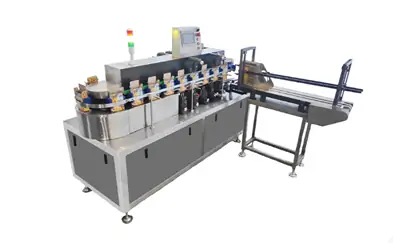
The finished pouch is released from the grippers and falls onto a take-away conveyor, passing under a checkweigher and metal detector. An automatic reject station pushes any out-of-spec package off the line. In well-designed systems, a soft pneumatic arm handles rejection rather than a high-speed blast, avoiding damage to heavy or fragile pouch edges.
A common trap is to compare machines by their maximum rated speed. Real sustained output depends on how the pick-and-place system handles film variability over an 8-hour shift, not on a 15-minute demo run. Servo-driven pick arms with real-time vacuum monitoring maintain pickup consistency as the stack height changes, while purely mechanical cam systems often need frequent adjustment.
Changeover time is equally important. If switching from a 100 mm to a 150 mm pouch requires swapping eight gripper sets and three seal jaws, you’ll lose hours of production every month. Tool-free, quick-release change parts and a recipe-driven HMI that recalls all servo positions, temperatures, and vacuum timers transform what could be a 45-minute changeover into a 10-minute task. When you’re evaluating equipment, ask for documented changeover logs, not just a spec-sheet promise. A system built around tool-free, recipe-driven changeovers is worth a close look if you run multiple pouch formats per week.
Understanding each station—pickup, opening, filling, sealing, cooling—gives you a real diagnostic framework you can use on your current line. When you translate that knowledge into a machine evaluation, focus on running your own film and product in a trial, provide the film’s coefficient of friction and the product’s bulk density, and ask for shift-long performance data, not just demo video highlights.
That applied understanding is ultimately what defines the right rotary premade pouch fill seal machine for your operation. If you’d like to move from principles to specifications, REZPACK’s engineering team can arrange a focused application review based on your pouch materials and production targets.
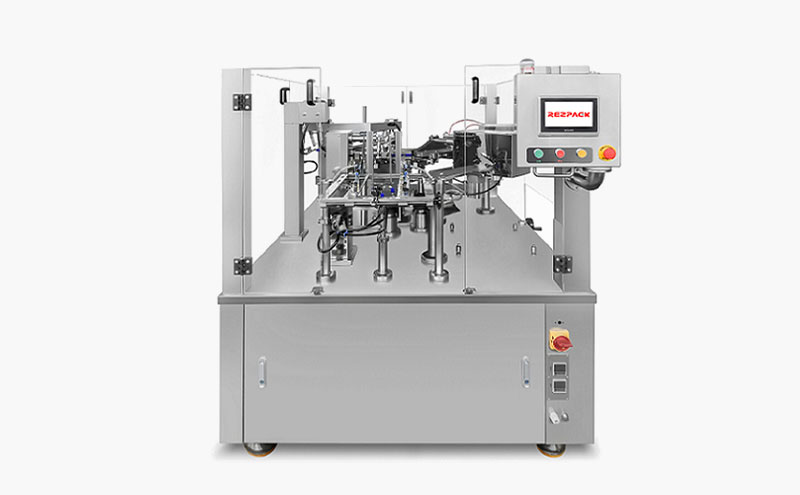
| Bag Width Range | 80-240 mm | Weight | 1500 kg |
| Bag Length Range | 150-370 mm | Total power | 3.02 kw |
| Filling weight | ≤ 1500g | Compress air | ≥ 0.4 m³/min |
| Max Speed | ≤ 60 bags/min | Dimensions | 1860 mm*1520 mm*1550 mm |
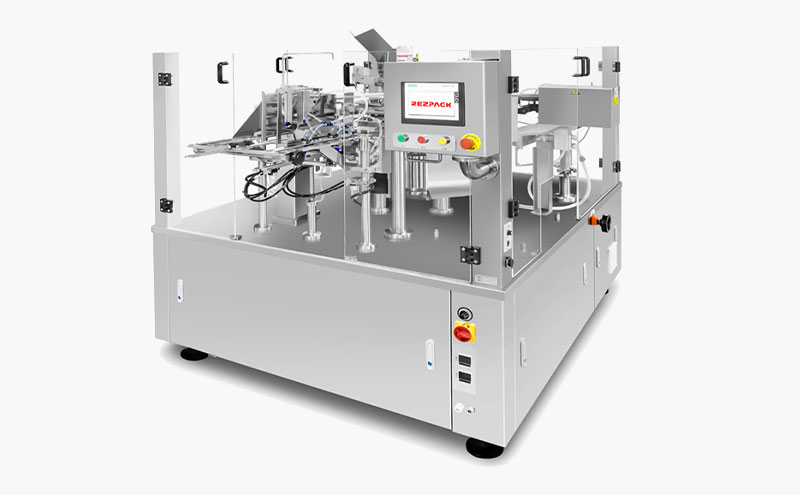
| Bag Width Range | 180-300 mm | Weight | 1800 kg |
| Bag Length Range | 150-450 mm | Total power | 3.62 kw |
| Filling weight | ≤ 2500 g | Compress air | ≥ 0.4 m³/min |
| Max Speed | ≤ 50 bags/min | Dimensions | 2080 mm*1720 mm*1650mm |
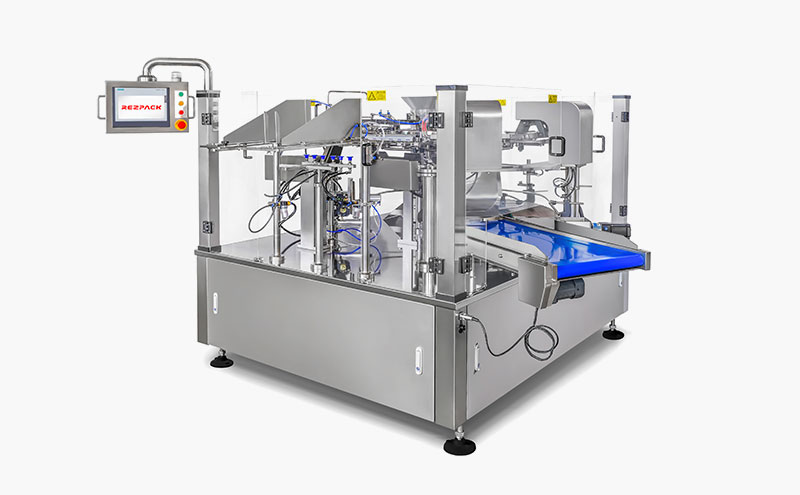
| Bag Width Range | 270-400 mm | Weight | 2500 kg |
| Bag Length Range | 150-600 mm | Total power | 3.62 kw |
| Filling Range | ≤ 5000g | Compress air | ≥ 0.4 m³/min |
| Max Speed | ≤ 30 bags/min | Dimensions | 2150 mm*2020 mm*1700 mm |