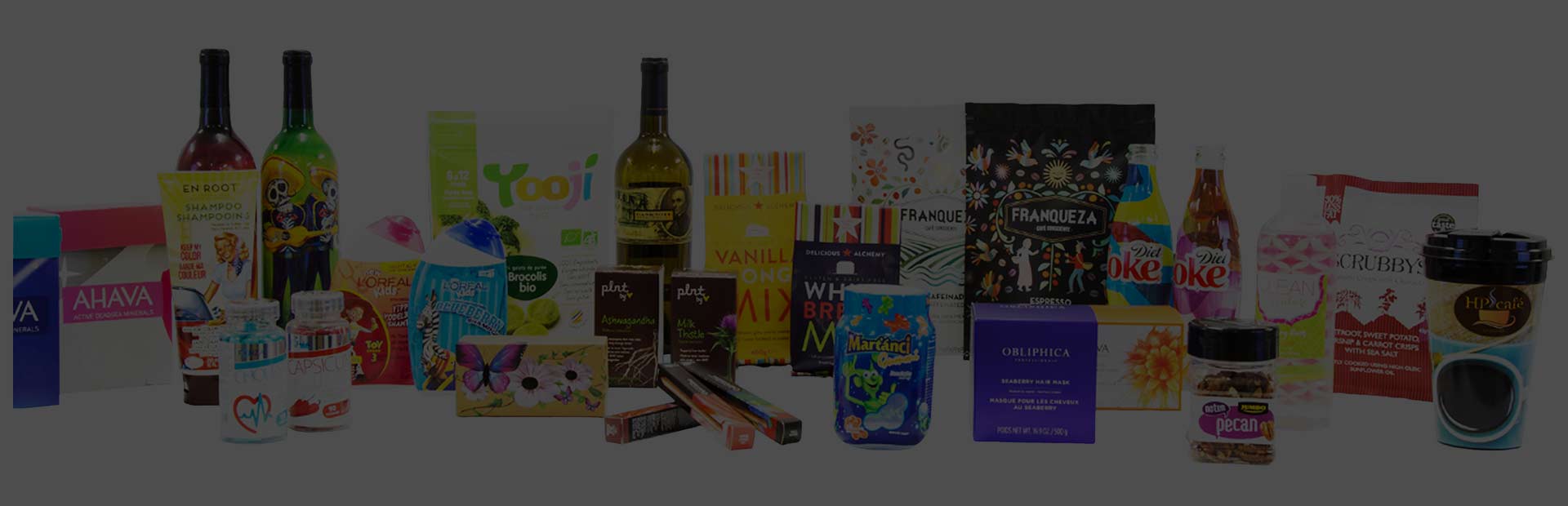
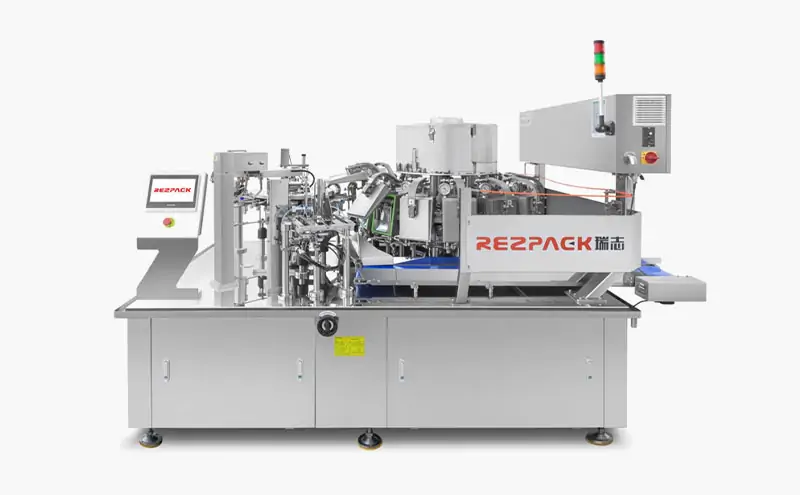
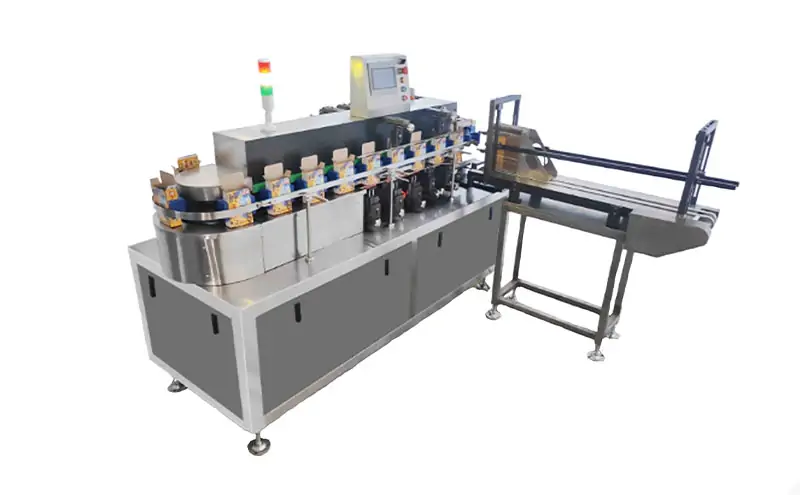
Stick VFFS (Vertical Form Fill Seal) machines are an ideal solution for businesses seeking efficient, high-speed packaging for small, convenient stick packs. These machines offer unmatched versatility, catering to a wide range of industries such as food, beverages, cosmetics, and chemicals. Stick packs are compact, easy to carry, and highly popular with consumers in today’s fast-paced world, making them a preferred choice for single-serving products.

Comprehensive Packaging Solutions

At Rezpack-Unionpack, we provide an extensive range of stick packaging solutions, from entry-level single-lane machines to high-performance 12-lane systems capable of packing up to 480 bags per minute. Our machines are designed for precision and reliability, offering customizable options to suit different production needs.

Applications

Stick VFFS machines can handle a variety of product types, including:

Granular Products: Sugar, salt, rice, coffee beans, and pepper.

Liquid Products: Ketchup, sauces, shampoo, softeners, juice, and liquid chemicals.

Powder Products: Flour, powdered milk, instant drinks, chemical powders, and powdered juice.

Advanced Technology for Superior Performance

Rezpack-Unionpack stick VFFS machines are CE-certified and equipped with state-of-the-art technology for seamless operation:

High Precision: Functions for longitudinal sealing, transverse sealing, filling, notch cutting, fracture line making, and transverse cutting ensure consistent and accurate packaging.

User-Friendly Design: The MITSUBISHI PLC system offers reliable performance with an easy-to-use interface available in multiple languages.

Efficiency and Flexibility: Adjusting pouch lengths is a simple process without needing to change molds, allowing for quick customization of portion sizes.

Special Features: Photoelectric tracking, automatic counting, page correction, and precise measurements enhance operational efficiency and minimize waste.

Why Choose Stick Pack Packaging?

Stick packs are smaller than traditional pouches, offering greater convenience and portability. Their sleek design makes them perfect for:

Single-Use Products: Ideal for on-the-go consumption, whether it’s sugar for coffee or instant drink powders.

Market Appeal: The variety of shapes, colors, and sizes makes stick packs visually appealing and suitable for branding.

Sustainability: Smaller packaging reduces material usage, making it an eco-friendly choice.

Your Trusted Partner in Stick Packaging

Rezpack-Unionpack’s Stick VFFS machines are built to last, ensuring a low-maintenance, cost-effective solution for your packaging needs. Our commitment to innovation and quality provides customers with machines that enhance productivity and open up new market opportunities.

Invest in Stick VFFS machines to stay ahead in the competitive packaging landscape. Contact Rezpack-Unionpack today to learn more about our customizable packaging solutions!

Inquire Now
Recent Post
img

A pet food producer in the Midwest once faced a frustrating bottleneck. Their existing linear pouch filler worked, but every product changeover cost them 45 minutes of lost production. Worse, during peak season, the machine couldn't keep up with its upstream filler. They asked a simple question: "Should we add another linear machine, or switch to a rotary design?"

That question gets asked every day in packaging rooms around the world. And the answer is rarely about speed alone.

Both rotary and linear configurations for pre-made pouches have loyal followers. But the right choice depends on five specific factors: your typical batch size, how often you change pouch sizes, available floor space, operator skill level, and your tolerance for film waste.

Illustrates the differences between linear and rotary packaging machines

The Fundamental Difference: Stop-and-Go vs. Continuous Motion

A linear machine moves pouches in a straight line. Each station—pick, open, fill, seal—operates sequentially. The pouch stops at each station before moving to the next. Think of it like a city bus: it stops at every corner.

A rotary machine places pouches on a rotating carousel. While the wheel turns continuously, the pouches move through all stations without stopping. The sealing bar rotates with the pouch, maintaining contact throughout the cycle. This is more like a moving walkway at an airport: you step on and keep moving.

This mechanical difference creates real-world trade-offs that many buyers overlook.

Speed and Output: When Does Rotary Pull Ahead?

For production lines running fewer than 40 pouches per minute, a well-tuned linear machine is often sufficient. Many mid-range linear systems reliably handle 35-45 cycles per minute with standard-sized bags (6 to 10 inches wide).

But once you need 60 or more pouches per minute, the linear design hits a physics limit. The stop-start motion creates inertia problems. Pouches can tip over. Sealing dwell time becomes inconsistent.

This is where a rotary premade pouch pick, fill, and seal machine typically shines. The continuous motion eliminates start-stop shock, allowing smoother handling at higher speeds. Some industrial bakeries report sustained outputs of 50-130 pouches per minute with rotary systems—without increasing operator fatigue.

However, speed isn't free. Rotary machines generally cost 40-60% more upfront than comparable linear models. The premium only makes sense if your volume justifies it.

Changeover Time: The Hidden Cost of Flexibility

This is where linear machines often win—at least on paper.

A typical linear machine can change between pouch sizes in 10-20 minutes. Many designs use color-coded guides and hand-adjustable rails. One snack food producer we spoke with said their operators could complete a full changeover during a standard 15-minute break.

Rotary designs traditionally required longer changeovers—sometimes 45 minutes or more—because multiple stations around the carousel needed to be synchronized. However, modern engineering has narrowed this gap significantly. Newer rotary platforms now feature servo-driven adjustments that store up to 50 recipe presets. With these systems, changeovers can drop to under 10 minutes.

If you run long production shifts with few changeovers, the rotary changeover time matters less. But if you run short batches of multiple SKUs, the linear approach—or a servo-equipped rotary—is more practical.

For a detailed breakdown of modern servo-driven changeover systems and their real-world payback periods, [see this technical comparison of adjustment mechanisms].

Floor Space and Layout Flexibility

Linear machines are, as the name suggests, long. A typical 4-station linear filler might span 12-15 feet. You need clearance at both ends for the pouch infeed and the finished package outfeed. This can force awkward floor plan layouts, especially in older facilities with columns or low ceilings.

Rotary machines have a much smaller footprint relative to their output. A rotary system producing 100 pouches per minute might occupy a 6-foot area—less than half the space of an equivalent linear machine. The compact design also simplifies integration with upstream equipment, such as auger fillers or multi-head weighers.

One frozen vegetable packer switched from two linear lines to one rotary line and freed up 400 square feet—enough space to add another palletizer.

Seal Quality and Film Waste

Linear machines use a reciprocating sealing bar that presses down, then lifts. This works well for most flat pouches. But for heavy products or gusseted bags, the linear seal can sometimes create "smile" effects—uneven sealing near the edges.

Rotary designs use a continuous band sealer that maintains constant pressure as the pouch moves. This produces more consistent seals across the entire width, especially for larger pouches or products with fine dust that can contaminate seal areas.

Film waste tells another story. Linear machines typically have simpler film paths, which can reduce waste during start-up and changeovers. Rotary machines, due to their more complex film handling, may waste 5-10 feet of film during each setup. Over a year of daily changeovers, that adds up. Calculate your film cost before deciding.

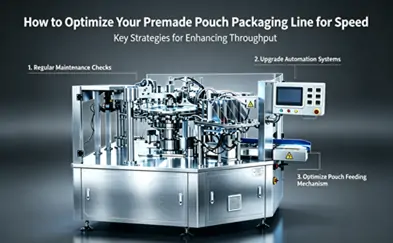
Rotary Premade Pouch Pick Fill Seal Machine

Operator Training and Maintenance

Linear machines are generally easier to learn. The stop-and-go motion gives operators time to see each step. Troubleshooting is more intuitive: if the fill station misfires, you watch it happen, then stop and fix it.

Rotary machines require more training. The continuous motion means operators must understand timing and synchronization. But once trained, one operator can often run two rotary machines simultaneously, thanks to the smoother material handling.

Maintenance costs also differ. Linear machines have simpler mechanics but more start-stop wear on clutches and brakes. Rotary machines have fewer shock loads but more complex cam tracks and servo systems. According to maintenance logs from a 2023 industry survey, total annual maintenance costs were within 15% of each other—but the distribution was different: linear spent more on mechanical brakes, rotary spent more on electronic sensors.

Decision Guide: Which One Fits Your Floor?

Factor Linear Machine Rotary Machine
Typical speed range 30-50 pouches/min 50-130pouches/min
Changeover time (traditional) 10-20 minutes 30-60 minutes
Changeover time (modern servo) 10-20 minutes 8-15 minutes
Floor space needed Large (linear layout) Compact (circular layout)
Initial investment Lower Higher (40-60% premium)
Operator training difficulty Low to moderate Moderate to high
Best for… Short runs, many SKUs Long runs, high volume

Making Your Choice

Start by calculating your required pouches per minute during peak season. Add 20% buffer. If that number exceeds 55, look seriously at rotary. If you're below 45, linear will likely serve you well—and save you capital.

Next, audit your changeover frequency. More than three changeovers per shift? Prioritize machines with recipe presets, regardless of rotary or linear design.

Finally, walk your floor. If space is tight, Rotary's compact footprint is hard to beat.

If you're still unsure which configuration matches your specific product mix and volume, [explore configuration examples from real production lines] to see how different brands solve these trade-offs.

What's your biggest packaging bottleneck today—speed, changeover time, or floor space? The answer to that question will point you toward the right technology.


References

Some of the data presented herein is derived from the *2023–2025 Packaging Machinery Industry Report*, technical specifications provided by leading manufacturers (Spack, Kenwei, Qualipak), and a survey of 127 end-users (CPMIA 2024).

These figures represent general industry reference ranges rather than absolute, fixed values; they are subject to minor adjustments based on specific manufacturer configurations and product characteristics. For detailed data, please contact the manufacturers directly.

img

Every production manager remembers that one morning. The packaging line suddenly becomes the bottleneck. Pallets of finished goods pile up, but nothing moves out the door because the sealing station can’t keep up. According to industry surveys, packaging operations account for nearly 30% of production delays in mid-sized food plants.

The problem isn’t usually the machinery itself. It’s the selection process that led to it.

When teams focus only on speed or price, they overlook how a packaging machine integrates into the existing workflow. The result? Frequent jams, inconsistent seals, and wasted film. To help you avoid this, here are five actionable tips based on real production floor experiences.

1. Match the Seal Integrity to Your Product’s Worst-Case Scenario

Many buyers test a machine with perfectly dry, room-temperature samples. That is a mistake. Your product rarely leaves the line in perfect condition. It might have moisture on the surface, fine dust, or uneven edges.

The real test is how the equipment handles variation. Look for a rotary vacuum packaging machine that offers adjustable dwell time and pressure. But more importantly, ask for a trial using your product in its “worst state”—right after washing, slightly frozen, or with natural oils present.

For example, a large smoked salmon processor once rejected three machines before finding one that maintained leak-proof seals even when brine residue was present. The difference wasn't just the vacuum strength. It was the sealing bar design and temperature control precision.

If you want to gain an in-depth understanding of specific sealing inspection methods, [contact us to obtain the technical guide for integrity].

2. Don’t Just Count Cycles—Calculate Effective Uptime

A machine might claim 60 cycles per minute. But what happens during a real shift? Film reloads, seal cleaning, and misfeed corrections all steal time. A smarter metric is “effective uptime” – the percentage of each hour the machine actually produces good packages.

Here is a simple rule from maintenance logs: for every 10 claimed cycles per minute, subtract 1-2 cycles for real-world losses on smaller pouches. For larger bags or rigid trays, subtract even more.

A better approach is to look for modular designs that simplify film changes and tool-less cleaning. These features directly improve effective uptime. One bakery client reduced their daily downtime from 45 minutes to just 12 by switching to a system with quick-release sealing jaws and an intuitive film tracking system.

Machine inspection close-up

3. Prioritize Sanitation in the Hidden Zones

Food safety audits are getting stricter. The days of only checking visible surfaces are over. Inspectors now look at the underside of conveyors, inside guarding panels, and around drive chains.

When evaluating equipment, bring a flashlight. Look at how the frame is welded. Are there horizontal ledges where debris can settle? Are electrical components protected but accessible? The best designs use sloped surfaces and sealed bearings.

Common operational errors include using high-pressure hoses near unsealed sensors. This causes phantom faults that stop production. To avoid this, choose systems with IP65 or higher ratings for control panels and avoid nooks that require brushes to clean.

For a real-world comparison of sanitation-friendly designs from different brands, [see this overview of hygienic machine features].

4. Think About Your Operator, Not Just Your Product

An often ignored factor is human fatigue. If loading pouches requires constant twisting or reaching, injury rates go up, and speed goes down. The same applies to control interfaces. A menu buried under four layers of buttons will slow down changeovers.

One mid-sized meat producer reduced training time from three weeks to three days simply by choosing a machine with a 7-inch color touchscreen that used intuitive icons instead of cryptic error codes. Operators could troubleshoot jams without calling a supervisor.

Ask your potential supplier: Can I see a video of a new operator using this machine after 15 minutes of training? The answer tells you more than any spec sheet.

5. Calculate the Hidden Cost of Consumables

The purchase price is visible. But spare parts and film waste are where budgets bleed. Some machines use proprietary sealing bars that cost four times more than industry-standard sizes. Others waste 2-3 inches of film per cycle as “leader” material.

A simple calculation can save thousands annually:

  • Film waste per day = (scrap per cycle) x (cycles per day) x (film cost per foot)

  • Spare parts availability – what is the lead time for a heating element? Two days or two weeks?

The most reliable suppliers publish their common spare parts list and typical shipping times. Avoid those who are vague.

Digital display screen

Making the Final Call

Choosing a packaging machine is ultimately about matching technology to your specific rhythm of production—not chasing the highest spec number. The best choice balances seal quality, real uptime, easy cleaning, operator comfort, and long-term consumable costs.

If you are currently evaluating options and want to see how these five tips apply to a modern, service-friendly design, explore the configuration tools and case studies available from REZPACK. Their approach focuses on reducing hidden downtime, and you can [request a detailed specification sheet] that compares effective uptime across different models.

What has been your biggest challenge with your current packaging line? Share your experience in the comments—your insight might help another production manager avoid a costly mistake.

img

In the fast-paced world of manufacturing and packaging, efficiency, versatility, and cost-effectiveness are the cornerstones of a successful operation. For businesses across industries—from food and pharmaceuticals to chemicals and snacks—a Vertical Form-Fill-Seal (VFFS) packaging system has emerged as a game-changing solution. But what exactly makes VFFS systems stand out? Below, we break down the core benefits of using a VFFS packaging system into three key categories, helping you understand why it’s a smart investment for your production line.

1. Operational Efficiency & Seamless Integration

The primary advantage of a VFFS packaging system lies in its ability to boost operational efficiency and integrate seamlessly into existing production workflows. VFFS systems operate at high speeds, automating the entire process of forming, filling, and sealing packages in one seamless workflow—eliminating bottlenecks and increasing throughput, which is critical for large-scale, high-volume production. Additionally, these systems are designed to integrate effortlessly with other production line equipment, such as conveyors, metal detectors, weight checkers, or inspection systems, creating a fully automated, streamlined process that reduces manual intervention and minimizes downtime. Their compact design is another efficiency-boosting feature: VFFS systems take up minimal floor space compared to other packaging methods, allowing businesses to optimize workflow layout and make the most of limited facility space—perfect for small to medium-sized factories.

2. Versatility & Quality Control

VFFS packaging systems excel in versatility and consistent quality control, making them adaptable to diverse industry needs. They can handle a wide range of products—including powders, liquids, granular items, snacks, and small solid products—with easy adjustments to accommodate different product types, package sizes, and shapes (from standard pouches to stand-up bags). This eliminates the need for multiple specialized machines, making VFFS ideal for industries like food, pharmaceuticals, and chemicals. Beyond versatility, VFFS systems ensure consistent, high-quality output: precise measurement and filling capabilities minimize product and material waste, while high-quality seals preserve product freshness, extend shelf life, and prevent contaminants from entering packages. Every package maintains uniform formation, filling levels, and seal strength, helping businesses maintain strict quality control and build a reputation for reliability.

3. Cost-Effectiveness & Market Adaptability

A VFFS packaging system delivers long-term cost savings and the flexibility to adapt to market demands, making it a cost-effective investment for businesses of all sizes. While the initial investment may be significant, VFFS systems offer a strong return on investment (ROI) thanks to reduced labor costs (automating tasks eliminates the need for a large manual team and minimizes human error), minimal product waste, and often the elimination of secondary packaging. Additionally, VFFS machines support full packaging customization—from size and shape to printing options (branding logos, expiration dates, barcodes, or nutritional information). This flexibility lets businesses tailor their packaging to meet specific customer preferences, market trends, and regulatory requirements, giving them a competitive edge in today’s crowded market. For businesses looking to balance upfront costs with long-term savings and market adaptability, VFFS systems are an ideal choice.

Why Choose a VFFS Packaging System?

From operational efficiency and versatile performance to cost savings and market adaptability, a VFFS packaging system offers comprehensive benefits that cater to businesses across industries. Whether you’re looking to scale production, reduce costs, improve product quality, or stay competitive, VFFS systems are a versatile, reliable solution that delivers long-term value. Want to get more professional industry advice on the VFFS system? Contact REPACK now!

img

Rotary premade pouch machines are the gold standard for automated flexible packaging in industrial production, designed to fill and seal preformed pouches (stand-up pouches, zipper pouches, spout pouches, flat pouches, etc.). Their rotary mechanical design and integrated automation deliver a suite of competitive advantages that align with the high-efficiency, flexible, and high-quality packaging needs of food, beverage, cosmetics, chemicals, and pharmaceutical industries—core demands for global B2B manufacturing and packaging buyers. Below are their key benefits, tailored to industrial production and international market requirements:

1. Exceptionally High Production Efficiency

The rotary turret structure enables continuous, synchronous operation of all workstations (pouch feeding, opening, filling, sealing, coding, discharge, etc.). Unlike reciprocating premade pouch machines (which have intermittent motion), rotary models eliminate idle time between process steps, achieving higher output speeds (typically 80–250 pouches per minute, depending on pouch size and material). For large-scale industrial production, this directly translates to higher throughput and lower unit packaging costs— a critical selling point for global manufacturers.

2. Versatile Pouch Compatibility

Rotary machines handle nearly all types of premade flexible pouches used in the global market, with minimal changeover:

  • Stand-up pouches (with/without zippers), spout pouches, flat pouches, quad-seal pouches, and eight-side seal pouches;
  • Laminated film pouches (PET/PE, AL/PE) for barrier protection, and food-grade compliant pouches (meeting FDA, EU, and other international standards). This versatility eliminates the need for multiple dedicated machines for different pouch formats, making it ideal for manufacturers with diverse product lines or custom packaging demands for overseas markets.

3. Precision & High Packaging Yield

The rigid rotary turret ensures stable, consistent positioning of pouches throughout the entire process, with precise control over:

  • Pouch opening (via vacuum suction, no misalignment or failure to open);
  • Filling accuracy (compatible with volumetric, weighing, piston, and liquid filling systems, with error rates <1%);
  • Sealing pressure/temperature (uniform heat sealing across the pouch seal edge). This precision reduces waste from leaky seals, under- or over-filling, or damaged pouches, boosting the first-pass yield to over 99% in most cases—critical for reducing material waste and production losses, especially for high-value products (e.g., pharmaceuticals, premium food, cosmetics).

4. Fast Changeover for Flexible Production

Most modern rotary premade pouch machines feature a modular design with quick-release parts (pouch holders, filling nozzles, sealing dies) and digital parameter storage. Changing over for different pouch sizes (width/length) or formats takes only 10–30 minutes (no complex mechanical adjustments), supporting small-batch, multi-variety production—a growing demand in the global market as brands shift to customized, niche packaging for regional markets.

5. High Automation & Integrated Production

Rotary machines are easily integrated with auxiliary equipment to create a one-stop automated packaging line:

  • Filling systems: for powder, granules, liquid, paste, mixed materials;
  • Coding/labeling: QR codes, batch numbers, expiry dates;
  • Quality inspection: seal integrity, weight check, metal detection);
  • Case packing/palletizing. This reduces manual intervention, lowers labor costs (a key advantage for regions with high labor costs, such as Europe, North America, and Australia), and minimizes human error in the packaging process.

6. Superior Seal Quality & Product Shelf Life

The rotary design delivers uniform pressure and heat distribution across the seal area, creating a strong, airtight, and moisture-proof seal—even for thick laminated pouches or pouches with zippers/spouts. A reliable seal prevents product spoilage, contamination, or leakage during international shipping and storage, extending product shelf life and reducing returns/complaints for exporters. All contact parts are made of food-grade 304/316 stainless steel, complying with global food safety and hygiene standards (FDA, CE, HACCP).

7. Compact Footprint & Space Efficiency

The rotary turret’s vertical, circular layout consolidates all workstations into a small footprint—30–50% less floor space than linear premade pouch machines of the same output. This is a major benefit for manufacturers with limited factory space (common in urban industrial areas of Europe, Asia, and North America) and simplifies factory layout and line integration.

8. Stable Operation & Low Maintenance Costs

Rotary machines feature a robust, precision-machined mechanical structure with fewer moving parts than reciprocating models, reducing wear and tear and lowering the risk of breakdowns. Most key components (bearings, motors, sensors) are international standard parts (e.g., Siemens, SMC, Omron) that are easily sourced globally—critical for overseas customers, who require convenient after-sales service and spare parts availability. Routine maintenance is simple (e.g., lubrication, filter replacement), with minimal downtime for repairs.

9. Wide Material Compatibility

Beyond pouch versatility, these machines handle all types of packaging materials for premade pouches, including plastic laminates, aluminum foil laminates, and biodegradable/compostable films (a fast-growing trend in the EU, North America, and other eco-conscious markets). This aligns with global sustainability regulations and brand ESG goals, making rotary machines a future-proof investment for international manufacturers.

10. Energy Efficiency

The continuous rotary motion has higher transmission efficiency than the start-stop motion of reciprocating machines, reducing energy consumption per unit output (typically 15–20% lower energy use). This lowers long-term production costs and meets the energy-saving and emission-reduction requirements of global industrial policies (e.g., the EU’s Energy Efficiency Directive).

Summary

For global B2B manufacturers and packaging solution providers, the core value of rotary premade pouch machines lies in their combination of high efficiency, flexibility, precision, and reliability—all while complying with international safety, sustainability, and quality standards. Their ability to support large-scale production and adapt to diverse regional packaging demands makes them the preferred choice for exporters and multinational brands looking to optimize their packaging lines for the global market.

GET A QUOTE

+86 18989886089

GET IN TOUCH NOW
Captcha Code
×
interpack-PROCESSING-&-PACKAGING
Exhibitions
We value your privacy
We use cookies to provide you with a better online experience, analyse and measure website usage, and assist in our marketing efforts.
Accept All