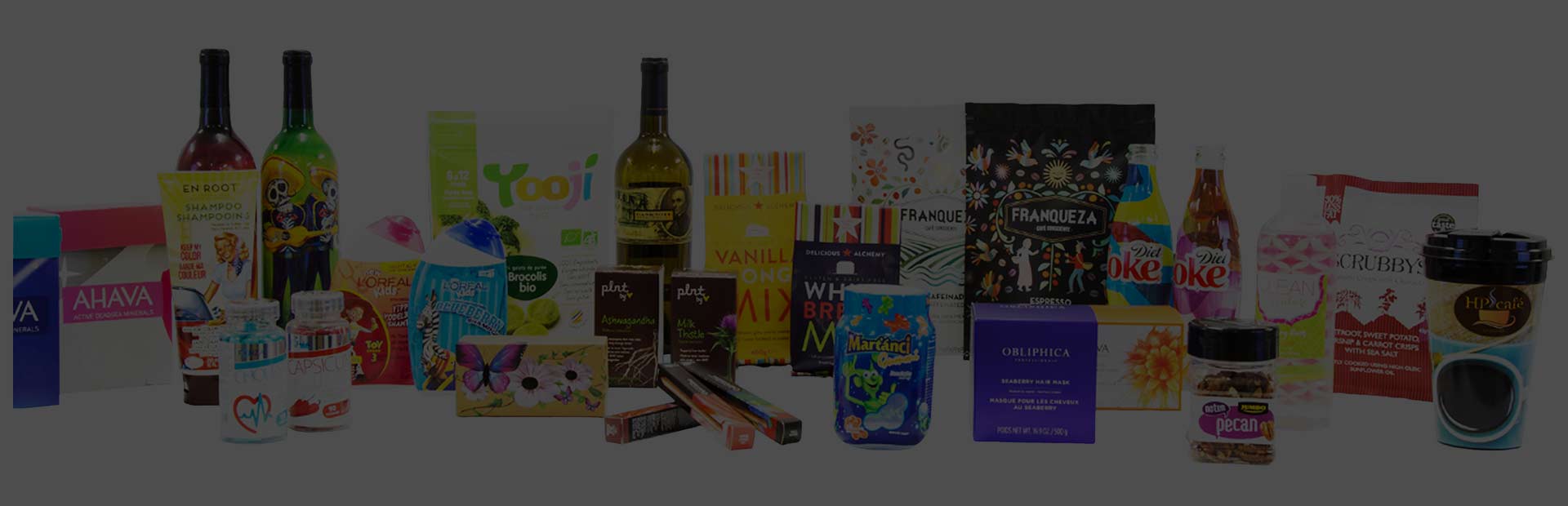
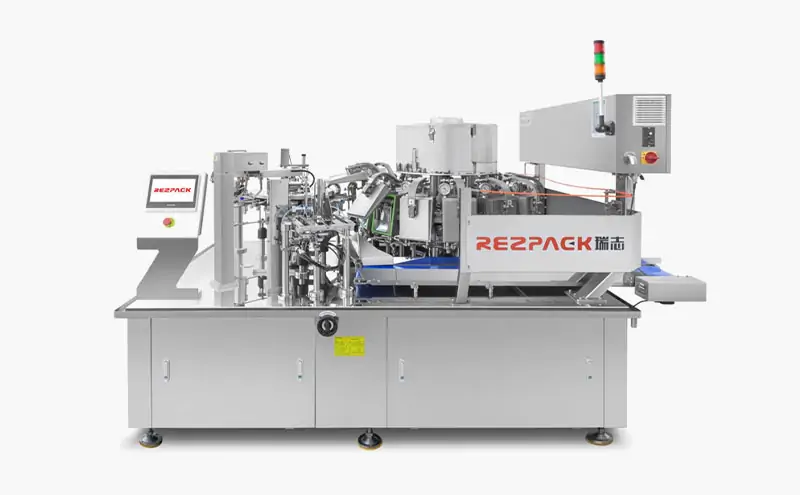
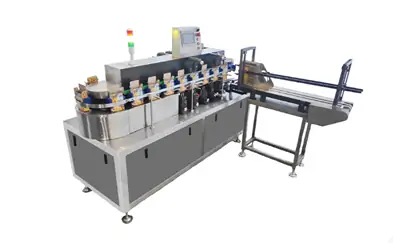
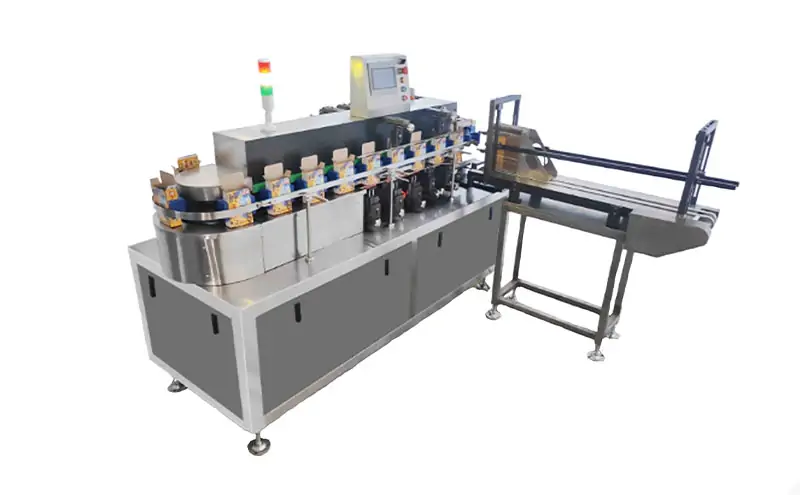
Since 2009, REZPACK has been at the forefront of the packaging machinery industry, offering reliable and high-quality packaging solutions. With our Tray Packing Machine, we provide an efficient, cost-effective solution for packaging pre-packaged foods, ensuring the utmost quality and freshness for your products.

Versatile and Reliable Tray Sealing Machines

Our Tray Packing Machines are designed for use with pre-formed trays, making them ideal for a wide range of retail applications. These machines are equipped with advanced Modified Atmosphere Packaging (MAP) or Vacuum Skin Packaging (VSP) technology, ensuring optimal preservation of food quality and extending shelf life. Whether you are looking for semi-automatic or fully automatic machines, REZPACK offers solutions to meet your specific production needs.

Key Features of Our Tray Packing Machine

1.Durable Stainless Steel Construction

Built with stainless steel and anodized aluminum, our tray sealer is designed to withstand wet environments, making it ideal for food packaging applications. The robust construction ensures long-lasting performance in demanding production environments.

2.Efficient Changeover and Easy Maintenance

The machine's design allows for a quick changeover within 5 minutes, ensuring minimal downtime. Its simple structure also makes cleaning and maintenance easy, improving your overall operational efficiency.

3.Flexible Speed and Performance

Our tray packing machines cater to both high-volume operations and smaller manufacturing setups. You can choose the machine that matches your speed and budget requirements, making it a versatile solution for businesses of all sizes.

4.Advanced Vacuum and Sealing Technology

Featuring a large Busch Vacuum Pump, the machine ensures superior vacuum sealing and optimal protection for your products. Whether you're sealing meal trays, containers, or thali packs, the machine's vacuum technology guarantees freshness and long shelf life.

Applications Across Various Industries

Our Tray Packing Machines are perfect for packaging a variety of food products, such as:

●Ready Meals: Ideal for sealing meal trays and pre-packaged food products.

●Fresh Produce: Keeps vegetables, fruits, and salads fresh with vacuum sealing.

●Meat and Poultry: Ensures optimal preservation and hygiene for meats and seafood.

●Bakery Items: Provides an airtight seal for bakery products, extending their freshness.

Why Choose REZPACK Tray Packing Machines?

●High Quality: We use only top-grade materials and components to ensure long-lasting performance.

●Customizable Solutions: Whether you need a semi-automatic or fully automatic solution, we have a machine tailored to your needs.

●Reliable Support: Our team provides expert installation, training, and after-sales service, ensuring smooth operation from day one.

If you are looking for a Tray Packing Machine that combines performance, reliability, and efficiency, REZPACK is your go-to solution. Contact us today to learn more about how we can help streamline your packaging process!

Inquire Now
Recent Post
img

You’ve seen them a thousand times. Stand-up pouches with zippers on supermarket shelves. Flat pouches of coffee with one-way valves. Doypacks of baby food. What you probably haven’t seen is the machine that fills and seals them—because a good packaging line runs quietly in the background.

For many small and mid-sized businesses, moving from hand-filling to automated pouch packaging feels like a leap. The terminology alone can be intimidating. Pick fill seal. Rotary indexer. Intermittent motion. Vacuum gas flush.

This guide breaks down exactly what a premade pouch packaging machine does, how it works, and what you need to know before buying one.

A variety of stand-up pouches and flat pouches on a white background

What Does a Premade Pouch Packaging Machine Do?

Simply put, this type of equipment takes pre-manufactured bags (pouches) that already have their bottom and side seals, opens them, fills them with product, and seals the top—all automatically.

The term “premade” distinguishes these machines from form-fill-seal systems, which create bags from a roll of flat film. Premade pouch machines are more flexible with bag styles (stand-up, flat, zipper, spout) and materials (foil, clear film, kraft paper laminate).

A complete cycle typically includes:

  1. Pick – A suction cup or gripper pulls a single pouch from a magazine

  2. Open–air jets or mechanical fingers open the pouch mouth

  3. Fill – Product drops through a funnel or multi-head weigher

  4. Seal – Heat sealing bars close the top, sometimes after vacuum or gas flush

Key Components of a Pouch Packing Line

Before diving into machine types, it helps to understand the main parts that work together.

Component Function
Pouch magazine Holds a stack of premade pouches and feeds one at a time
Pick-and-place arm Transfers pouches to the carousel or indexing conveyor
Opening station Uses suction or mechanical fingers to open the pouch mouth
Filler interface Connects to an auger, cup filler, or weigher
Seal station Applies heat and pressure to seal the top of the pouch
Discharge conveyor Moves finished pouches to downstream checkweighers or packers

Rotary vs Linear: The Two Main Designs

Premade pouch machines come in two primary configurations: linear and rotary. The difference matters for speed, footprint, and changeover time.

Linear machines move pouches forward on a straight path, stopping at each station. This design is simpler, often less expensive, and works well for speeds up to 50 pouches per minute. Changeovers are usually faster because adjustments are straightforward.

Rotary machines mount pouches on a rotating carousel. The wheel turns continuously, so pouches never stop moving. This enables speeds from 60 to over 120 pouches per minute. Rotary designs also provide more consistent vacuum and sealing because the pouch stays clamped throughout the cycle.

For a deeper comparison of these two designs on real production floors, explore this side-by-side analysis of linear vs rotary performance.

How a Typical Cycle Works (Step by Step)

Let’s walk through a complete cycle on a mid-speed rotary platform. Even if you’re considering a linear machine, the basic steps are similar.

Step 1: Pouch feeding. A stack of pouches sits in a magazine. A suction cup pulls the front pouch forward while air jets prevent double picks. The pouch is transferred to a clamp on the carousel.

Step 2: Pouch opening. As the carousel rotates, the pouch passes under an opening station. Two suction cups pull the front and back panels apart. Sensors confirm the pouch is fully open before the product drops.

Step 3: Filling. The open pouch moves under a filler discharge. Product falls in—everything from coffee beans to pet treats to liquid soap. Some systems use a vibratory fill to settle product and reduce air pockets.

Step 4: Pre-seal (optional). For dusty or fine products, a pre-seal tacks the top edges together to prevent contamination of the final seal area.

Step 5: Vacuum or gas flush (optional). For extended shelf life, the machine can remove oxygen and replace it with nitrogen before sealing. This is common for coffee, nuts, and dried meat.

Step 6: Final sealing. Heated bars press the top of the pouch for a specific dwell time. Temperature and pressure are carefully controlled. A cooling bar may follow to set the seal.

Step 7: Discharge. The finished pouch is released onto a conveyor. Rejected pouches (if a sensor detects an issue) are diverted to a separate chute.

The entire process, from pick to discharge, typically takes 1 to 3 seconds per pouch on a rotary system.

What Products Work Best?

Premade pouch machines handle an incredibly wide range of products:

  • Granular: coffee beans, rice, nuts, seeds, pet food

  • Powder: protein powder, flour, spice blends, infant formula

  • Liquid: sauces, oils, ready-to-drink beverages

  • Solid pieces: candy, dried fruit, frozen vegetables, hardware

The key requirement is that the product must flow predictably through a filler. Sticky, stringy, or oversized items may need specialized fillers.

Common Misconceptions

Myth: “Premade pouches cost more than rollstock film.”
Fact: While the pouch itself costs slightly more, the machine is simpler, and changeover is faster. For short to medium runs with multiple SKUs, premade often wins on total cost.

Myth: “You need highly trained operators.”
Fact: Modern machines with touchscreen controls and recipe storage reduce training to hours, not weeks. One contract packer reported training new operators in under two hours.

Myth: “Rotary machines are only for huge factories.”
Fact: Compact rotary designs now fit in small footprints. A 120-pouch-per-minute rotary line often occupies less floor space than a 50-pouch-per-minute linear line.

Choosing the Right Machine for Your Volume

A rotary premade pouch pick fill seal machine makes sense when you need sustained speeds above 55 pouches per minute, especially with vacuum or gas flush. The continuous motion delivers consistent seal quality even at high output.

Linear machines still dominate for slower lines, frequent changeovers, or tight capital budgets. Many small roasters and bakeries start with a linear machine and upgrade to rotary as they grow.

To see real-world examples of which businesses choose rotary versus linear, browse application case studies from food and non-food packers.

Small footprint rotary machine

Maintenance and Long-Term Costs

Every pouch machine needs regular attention. The most common wear items are:

  • Suction cups (replace every 3-6 months)

  • Sealing bands and Teflon tape (monthly inspection)

  • Heating elements (6-12 months depending on usage)

The difference between good and great machines is tool-less access. If you need a wrench to change a suction cup or a sealing band, downtime adds up. Machines with quick-release components and accessible guarding significantly reduce maintenance time.

Is a Premade Pouch Machine Right for You?

Ask yourself three questions:

  1. Do you use stand-up pouches, flat pouches, or bags with zippers/spouts? If yes, premade machines are your best option.

  2. Is your current hand-filling or semi-auto line costing you labor hours? Automation typically pays back within 12-18 months for lines running 30+ pouches per minute.

  3. Will your volume grow beyond 50 pouches per minute? If yes, consider rotary from the start to avoid upgrading twice.

Next Steps

Understanding what a premade pouch packaging machine does is the first step. The second step is matching the right configuration—rotary vs linear, vacuum vs standard seal, servo-driven vs pneumatic—to your actual product and shift schedule.

If you’re ready to move beyond the basics and evaluate specific models for your product type, review detailed specifications, and request a product matching consultation.

Have you already narrowed down your speed requirements, or are you still exploring options? Knowing your target output per minute makes the next conversation much more productive.

img

The production manager’s voice was tense. “Our upstream filler runs at 100 units per minute, but our bagging line maxes out at 45. We’re building inventory all day and shipping nothing.”

That phone call happens every week. A packaging line that can’t keep up with the rest of the factory creates a costly bottleneck. Adding a second shift helps, but that doubles labor cost. Adding a second machine doubles floor space and maintenance.

The real solution lies in understanding why intermittent motion machines hit a speed wall—and what continuous motion technology does differently.

Why Most Pouch Lines Stall Below 60 Bags/Min

Conventional pick-fill-seal machines use stop-and-go indexing. The pouch moves to a station, stops, the operation happens, and then it moves again. This works perfectly at 30–50 cycles per minute. But above 55, physics intervenes.

Every stop creates inertia. Pouches tip over. Films stretch. Sealing bars must dwell longer than the machine allows. The result: misfeeds, wrinkled seals, and constant operator intervention.

According to data from packaging equipment audits, nearly 70% of intermittent-motion lines running above 50 BPM experience at least one jam per hour. That doesn’t show up on the spec sheet.

The Continuous Motion Difference

Instead of stopping for each operation, a continuous rotary platform keeps pouches moving through a carousel. Pick, open, fill, and seal happen while the pouch travels in a smooth circular path.

The benefits multiply at higher speeds:

  • No start-stop shock means pouches stay upright

  • Sealing bars rotate with the pouch, providing consistent dwell time regardless of speed

  • Vacuum and gas flush cycles happen during travel, not after stopping

One pet treat manufacturer documented the switch: their old linear line averaged 48 bags per minute with 12% rejects. After moving to a continuous rotary design, they sustained 112 bags per minute with under 2% rejects. The same operators ran both lines.

Three Bottlenecks That Kill Throughput (And How to Fix Them)

Even with the right machine type, speed killers hide in plain sight. Here are the most common ones we’ve seen across dozens of packaging floors.

Bottleneck 1: Film Slippage and Misregistration

At high speeds, film tension becomes critical. If the machine uses friction alone to advance the web, slippage causes off-registration prints and uneven seals.

Fix: Look for servo-driven film pull systems with closed-loop tension control. These adjust in real time, maintaining perfect registration even during acceleration and deceleration. Some advanced systems store tension profiles for different film types—nylon, polyester, or laminate.

Bottleneck 2: Slow Changeovers

A machine that runs 120 BPM for one hour, then takes 45 minutes to switch pouch size,s delivers an effective speed far below its rating. Changeover time is the hidden thief of overall equipment effectiveness (OEE).

Fix: Prioritize machines with recipe storage and motorized adjustments. Modern rotary platforms can store 50+ pouch recipes and complete size changes in under 10 minutes. One cheese packaging plant reduced its daily changeover time from 2.5 hours to 35 minutes by adopting this feature.

High Speed Double Bag Filling Sealing Machine

Bottleneck 3: Operator Intervention During Jams

Every jam stops production. But the real cost is how long it takes to clear. Machines with difficult access—guards that require tools, sealing areas buried behind panels—turn 30-second jams into 10-minute stoppages.

Fix: Evaluate tool-less access. Can the operator open the guarding with one motion? Are sealing bars visible and reachable without disassembly? According to maintenance logs, machines with full tool-less access reduce jam clearance time by an average of 70%.

The Speed Formula: What 120 BPM Really Requires

Reaching 120 bags per minute isn’t just about the machine. It requires coordination across four components:

Component Requirement for 120 BPM
Pouch infeed Continuous magazine with automatic splicing
Filler integration Volumetric or multi-head weigher that discharges within 0.5 seconds
Vacuum system High-flow pump capable of 99% evacuation in <1.5 seconds
Sealing system Constant temperature control with 0.5°C accuracy

Missing any of these creates a new bottleneck elsewhere. A rotary premade pouch pick fill seal machine running at 120 BPM demands that every upstream and downstream element is synchronized.

For a detailed breakdown of how to match filler speed and vacuum capacity to target output, [refer to this speed-matching technical reference].

Real-World Results: From 55 to 115 BPM

A frozen vegetable packer approached us with a familiar problem. Their existing line topped out at 55 BPM because the linear indexing machine couldn’t handle the weight of 2-pound frozen bags. Bags toppled during stops, and the operator spent half the shift picking up fallen pouches.

After evaluating continuous rotary designs, they installed a system with servo-driven pick-and-place and a 10-station carousel. The results after 90 days:

  • Sustained output: 115 BPM (averaged over full shifts)

  • Reject rate: 1.7% (down from 9.2%)

  • Operator fatigue complaints: nearly eliminated

The payback period? Eleven months, based on labor savings and reduced film waste alone.

To calculate your own potential payback at different speed targets, [download this ROI calculation worksheet].

Common Misconceptions About High-Speed Packaging

Myth: “Faster machines require more skilled operators.”
Fact: Modern rotary platforms with intuitive touchscreens often require less training because they automate tension, timing, and registration. One bakery chain reduced training time from 40 hours to 8 hours after switching.

Myth: “High speed means higher film waste.”
Fact: Continuous motion actually reduces waste because there’s no start-stop film snapping. Many users report 15-25% less film waste at 100+ BPM compared to intermittent lines at 50 BPM.

Myth: “You need a new facility to run Rotary.”
Fact: Rotary machines have a much smaller footprint per output than linear designs. A 120 BPM rotary system often occupies less floor space than a 50 BPM linear system.

Your Path to 120 Bags Per Minute

Before investing in any high-speed solution, follow this three-step validation process:

  1. Calculate your true required speed. Don’t just use peak demand. Look at sustained hourly rates over a full week. Add 20% for growth and downtime.

  2. Test with your actual film and product. Watch the machine start cold, run for an hour, and go through a changeover. Bring your most difficult pouch size.

  3. Interview existing users. Ask about spare parts lead times, software reliability, and what they wish they’d known before buying.

Is Your Line Ready to Accelerate?

Speed alone isn’t the goal. Consistent, reliable speed with low waste and happy operators—that’s the real win. If your current packaging line is holding back your production, the technology to reach 120 BPM exists today.

To see how different rotary configurations compare on changeover speed, film waste, and real-world uptime, [browse detailed specifications and case summaries].

What’s your current bottleneck—film handling, filler speed, or sealing reliability? The answer might point you toward a very different solution than you expected.

img

Last March, a mid-sized cheese producer in Wisconsin watched an entire pallet of premium aged cheddar roll back from a distributor—not because of taste, but because of cloudy pouches, loose seals, and the faint, sour whiff of oxidation. The financial hit topped $18,000. The root cause wasn't the recipe, the cold chain, or the bag supplier. It was a series of microscopic seal-channel leaks invisible to the naked eye. This story isn't rare. In fact, one industry survey found that over 60% of ambient-temperature product recalls tied to flexible packaging originate from seal integrity failures, not film punctures.

Sealing quality seems simple: heat two layers of film together until they melt, press, and cool. But as soon as you introduce a vacuum, time pressure, and a variety of product contaminates, the physics get complex fast. The difference between a package that stays flawless for 12 months and one that leaks in three weeks often boils down to a handful of science-backed parameters that most operator manuals gloss over.

RZ10-100E-14ZK Rotary Vacuum Packing Machine

Why Do Seals Fail Even When They Look Perfect?

Visual inspection is deceptive. A seal can appear smooth and continuous yet still contain capillary channels—tiny pathways that allow oxygen and moisture to migrate in. This phenomenon, known as “channel leaks,” typically occurs when contamination such as oil, powder, or product juice gets trapped in the seal area during the evacuation and sealing sequence.

Consider the typical cycle of a high-speed packaging line: a pouch is filled, transferred into the chamber, and air is evacuated. As the vacuum pulls air out, it can also aerosolize fine particles or animal fats from the product surface. These particles settle on the inner film layers right where the sealing bar will press. The result? A microscopic sandwich of polymer-contaminant-polymer that never truly fuses. According to ASTM F1929, the standard test for dye penetration, a seal passing a basic pull test may still show 30–50% penetration under colored dye—clear evidence of a leak path that compromises shelf life.

The fix isn't just "clean the sealing area more often." The vacuum draw profile itself matters. A slower, staged evacuation (sometimes called “soft air removal”) reduces turbulence inside the pouch, dramatically lessening the aerosolization of particulate contaminants. Many older vacuum packaging machine models lack this capability, using aggressive single-stage pumps that can worsen the problem. Understanding this interplay between fluid dynamics and seal purity is the first step toward reliability.

The Heat Seal Trinity: Time, Temperature, and Pressure—Why the Right Combination Is Moving Target

Most packaging engineers learn the basics: dwell time, sealing bar temperature, and jaw pressure. What gets missed is that these three variables are not independent dials—they form a dynamic bond-strength surface. Adjust one, and the optimal settings for the other two shift.

Take temperature. The sealing layer of a typical multi-layer barrier film might be linear low-density polyethylene (LLDPE) with a melting range of 105–115°C. Set the bar to 125°C and you think you have a safety margin. But temperature at the seal interface is not bar temperature. It's bar temperature minus heat loss through the film, the Teflon cover, and the backing material—losses that change as the machine runs, from cold start to steady state. A bar thermocouple reading of 125°C might translate to just 108°C at the interface during the first few cycles of a shift.

Similarly, pressure matters down to the Newton. Research published in the Journal of Applied Packaging Technology showed that for co-extruded PE/nylon films, seal strength increases steeply with jaw pressure up to around 400 kPa, after which it plateaus—and then actually declines as excessive pressure causes polymer thinning at the edges. Without calibrated, consistent pressure distribution across the entire seal length (especially in wider pouch formats), corner leaks become chronic.

The solution is not heroic manual adjustments every hour. It’s equipment that maintains these parameters in a tight window automatically, compensating for thermal expansion and film thickness variation. When evaluating systems for high-mix production environments, the ability to save and recall recipe-driven seal profiles becomes a game changer for quality assurance teams.

Material Science: Your Film Chooses Your Seal Window, Not Vice Versa

A common operational mistake is to treat all vacuum pouches as interchangeable. A 3-mil polyethylene bag and a 5-mil high-barrier laminate containing EVOH and metallized layers have radically different thermal conductivities and softening points. When operators use the same heat setting for both, one material scorches while the other barely seals.

The concept of the “seal initiation temperature” (SIT) defines the minimum heat required to achieve a seal of measurable strength. For LLDPE sealants, SIT might be 90°C. For co-polymer polypropylene (CPP) sealants often used in retort pouches, SIT can be above 130°C. If your changeover process doesn't adjust both temperature and dwell time accordingly, you will produce waste.

Another layer of complexity: oxygen barrier films containing EVOH are moisture-sensitive. EVOH loses its oxygen barrier properties as relative humidity rises. If your vacuum packaging process leaves enough residual moisture in the headspace, the barrier properties can degrade over time—even though the seal stays intact. This is why headspace oxygen level monitoring, not just seal integrity testing, is crucial for long-life products like medical devices or shelf-stable foods. Standards such as ISO 11607-1 for terminally sterilized medical packaging mandate seal strength and integrity tests, but also require demonstrating that the entire packaging system maintains sterility under distribution conditions—a direct nod to the interplay between seal and barrier.

For operations that shift between fresh meat (with liquids) and dry powders, or between freezing and ambient storage, equipment flexibilty becomes a business continuity factor. The ability to handle multiple seal parameters reliably can reduce the number of packaging lines needed.

Mapping Oxygen: Residual Levels That Actually Matter

Vacuum sealing aims to remove oxygen, but “zero” oxygen is a myth. Even in a high-vacuum chamber, residual oxygen levels of 0.5–1% are common. Whether that matters depends on the product. Fatty fish with high polyunsaturated fat content will oxidize and develop rancidity at oxygen levels above 0.3%. Dehydrated potato flakes might not show noticeable change until 1.5%. So the target residual oxygen is product-specific science, not a universal number.

Chamber vacuum systems achieve deep vacuum by removing air from the entire chamber before the pouch is sealed. The final absolute pressure achievable depends on pump capacity, chamber seal integrity, and cycle time. A typical rotary chamber design—where multiple chambers rotate on a carousel—can achieve reliable pressures of 1–5 mbar, sufficient for most food and medical applications. By contrast, lower-cost nozzle-based external vacuum systems often struggle to go below 50 mbar, leaving far more residual oxygen. This discrepancy affects shelf life in a linear way: one study on cold-smoked salmon showed each 0.1% increase in residual oxygen reduced sensory shelf life by approximately 2 days.

For producers trying to extend shelf life without preservatives, reaching consistent, low residual oxygen levels across every single pouch is where engineering precision matters. A system that delivers 3 mbar in one cycle and 12 mbar in the next creates a logistics nightmare of variable best-before windows.

Seal Integrity Testing: From Destructive to Predictive

How do you know your seals are trustworthy? The most common method is the pull test, often performed with a simple tensile tester set to grip the seal tails. It’s fast but rudimentary. A seal might register 25 N/15mm and “pass,” only to fail later due to channel leaks missed by the pull angle. More rigorous methods include dye penetration (ASTM F1929), burst testing (ASTM F1140), and vacuum leak testing using a test chamber and pressure transducer. Yet all of these are destructive or surrogate tests. They don't test the actual package heading to the customer.

Emerging in-line predictive systems use vision inspection and thermal imaging. A thermal camera positioned after the sealing station can map the heat pattern across the seal area. A cold spot indicates insufficient fusion; an overheated band suggests thinning. This feedback loop, when integrated with a packaging system that can auto-reject suspect pouches, is transforming quality from sample-based to 100% inspection. While such systems are not yet commonplace in small facilities, they highlight a future where every seal is verified.

If you are currently relying on a once-per-shift tear test, the most immediate improvement is to validate your test method against dye penetration at least quarterly for each film type and pouch size. This builds a correlation model so your operators know that a pull test value of, say, 20 N actually corresponds to zero dye penetration channels, not just “feels strong.”

RZ10-140E-14ZK vacuum pouch packaging machine

Maintaining Excellence Through Equipment Design

All the science in the world won't help if the sealing bar has uneven wear or the vacuum pump oil hasn't been changed in 800 hours. Maintenance is the thread holding seal consistency together. Sealing bars with removable Teflon covers that are regularly inspected for surface cuts and replaced prevent hot spots. Digital counters that track cycle counts per bar can prompt replacement before failure. Similarly, vacuum pump oil condition directly affects ultimate vacuum level; a simple logbook noting time to reach target pressure can reveal pump degradation early.

Another overlooked aspect is the physical alignment of the sealing jaws. A misalignment of just 0.2 mm across a 600 mm bar results in uneven pressure distribution, which translates into weak seal tails on one side. Regular validation using pressure-sensitive film placed between the jaws takes minutes and can prevent weeks of intermittent seal defects.

Equipment that makes these maintenance points visible and accessible—with quick-release seals, tool-less cover removal, and digital maintenance dashboards—tend to have higher up-time and drastically lower seal failure rates, simply because operators can perform the tasks without production pressure causing shortcuts.

A reliable vacuum packaging system will embed seal science into its control logic. Instead of expecting operators to become polymer physicists, it manages the critical parameters within validated ranges. For facilities looking to move from reactive quality control to in-line consistency, exploring systems with recipe-driven controls, staged vacuum profiles, and robust seal-bar engineering can deliver measurable shelf-life extension and waste reduction. You can learn more about how the REZPACK rotary platform applies these principles in a continuous-motion format to support high-throughput, low-leak packaging operations. 

Bringing Science to Your Packaging Line

Seal science isn’t just an academic exercise. It’s the difference between a product that delights and one that triggers a recall. The fundamentals—contamination control, precise heat-energy delivery, material compatibility, and verifiable integrity—are universal. But their application changes with every pouch size, film type, and production speed.

If your team is fighting intermittent seal issues, start with data. Log seal failures by film lot, shift, and machine. Map the “seal window” for each SKU with simple pull vs. dye-penetration correlations. Then assess whether your current equipment allows you to hold those windows automatically. The days of operator-dependent seal quality are ending; packaging science has matured to the point where precision should be built into the machine, not the prayer. For operations ready to take the next step toward repeatable, data-driven sealing, the rotary vacuum packaging solution from REZPACK offers a case study in how thoughtful engineering can reduce variability at every stage of the sealing cycle. 

Data sources cited are from publicly available packaging research and industry standards. Specific company examples have been anonymized to protect confidentiality.

img

A snack food producer had just taken delivery of their new packaging line. Three weeks later, the machine sat idle. "It works fine on dry products," the plant manager explained, "but our nuts have oil on the surface. The seals fail within a week."

They had done their homework—or so they thought. They compared speeds. They checked prices. They even visited a trade show. But they missed one critical detail that their sales rep never mentioned.

That story repeats itself more often than equipment suppliers like to admit. After interviewing maintenance managers and production supervisors across five industries, seven preventable mistakes keep appearing. Here's what they are—and how to avoid them.

Frustrated plant manager standing next to an idle packaging machine with rejected pouches piled nearby

Testing Only Perfect Products

Every packaging machine looks good when fed bone-dry, room-temperature samples. But your production line isn't a laboratory. Your product comes off the line with moisture, dust, oil, or uneven temperatures.

The fix: Bring your worst-case product to the demo. Slightly frozen? Do it. Just marinated? Test it. Fine powder on the surface? Run it through. If the machine chokes on your hardest product, keep looking.

One meat processor learned this the hard way. Their chosen sealer worked beautifully—until they ran the first batch after cleaning, when surfaces were still damp. The machine rejected 40% of seals for two hours every shift.

Ignoring Effective Uptime

A sales rep says, "60 cycles per minute." But what happens during a real shift? Film changes, seal cleaning, misfeed corrections, and jam clearances all eat into that number. A machine that claims 60 cycles might deliver 35 effective cycles per minute over an eight-hour shift.

The fix: Ask for production logs from existing customers running similar products. Calculate effective uptime = (actual good packages produced) ÷ (total shift time). Anything below 80% on similar applications is a red flag.

According to maintenance records from a 2023 industry survey, the gap between claimed and effective speed averages 25-35% for systems without tool-less change parts.

Forgetting the Operator

Walk onto any packaging floor, and you'll see it: operators working around a machine's flaws. Reaching awkwardly to load pouches. Squinting at cryptic error codes. Wiping sealing surfaces with rags because the design traps debris.

The fix: Before buying, ask to see the machine running with operators who weren't involved in the sales process. Watch their body language. Are they constantly adjusting something? Do they look tired by mid-shift?

A rotary vacuum packaging machine with thoughtful ergonomics—like angled pouch loading and intuitive touchscreen controls—can reduce training time from weeks to days. But that only matters if you actually test the interface before signing the PO.

Overlooking Film Waste in the Calculation

Purchase price is visible. Film waste is invisible—until you see it on your P&L. Some machines waste 2-3 inches of film per cycle as "leader" material. Others require long test seals after every changeover.

The fix: Calculate annual film waste before comparing quotes. Formula: (wasted inches per cycle) x (cycles per day) x (operating days) x (film cost per foot). A machine that costs $10,000 less but wastes an extra $8,000 in film annually isn't a bargain.

One freeze-dried fruit packer discovered their "budget-friendly" sealer consumed 18% more film than the premium alternative. Over three years, the film savings alone paid for the upgrade.

Skipping the Spare Parts Audit

A heating element fails. A sealing band wears out. How long until you're running again? Some suppliers stock common parts locally. Others require air freight from overseas—and you pay the bill.

The fix: Request a complete consumables and wear parts list with current pricing and typical lead times. Ask: "What parts fail most often? Which ones ship same-day?" Avoid suppliers who can't answer both questions.

A beverage co-packer we interviewed learned this after their sealing band failed on a Friday afternoon. The replacement arrived on Wednesday—four production days lost. Their rush shipping cost exceeded the part price by 600%.

Believing "One Size Fits All" for Vacuum Levels

Different products need different vacuum depths. Crumbly items need a gentle, staged vacuum to avoid crushing. Dense items need a deep, aggressive pull to remove trapped air. Liquid-containing products need controlled rise rates to prevent boil-over.

The fix: Ask about programmable vacuum curves. Can the machine store multiple profiles? Can operators switch between them without reprogramming parameters? If the answer is "fixed vacuum level only" and you run more than one product type, keep shopping.

For a detailed comparison of vacuum control systems and their real-world impact on different product categories, You can contact us to obtain the technical guide for programmable vacuum parameters.

Automatic Vacuum Packaging Machine's control panel screen

Buying Without a Full-Day Site Visit

Watching a machine at a trade show or supplier demo center tells you very little. The conditions are controlled. The operators are experts. The product is pre-screened.

The fix: Insist on a full-day site visit to an existing customer running a similar product. Watch the machine start up cold. Watch it through a product changeover. Watch what happens when something jams. That's the real test.

If a supplier hesitates to arrange a site visit, consider that a significant warning sign. Transparent manufacturers welcome these visits because they know their machines perform under real conditions.

The Hidden Cost of Rushing

Most of these mistakes share a common root: urgency. A new contract requires capacity. A seasonal spike is coming. A competitor just upgraded. So you rush.

But the data tells a different story. According to an analysis of 47 packaging line investments, projects that included at least three site visits and two product trials had 82% fewer change orders and 67% faster time-to-full-production than rushed purchases.

Your Pre-Purchase Checklist

Before signing anything, verify these five items:

What to Check Why It Matters
Worst-case product test Reveals seal failures that perfect samples hide
Effective uptime data Exposes the gap between claimed and real speed
Operator ergonomics Determines real-world productivity and retention
Annual film waste calculation Often exceeds purchase price differences
Spare parts lead times Directly impacts the cost of unplanned downtime

Making a Smarter Decision

The best packaging machine isn't the fastest or cheapest—it's the one that runs reliably with your actual product, your actual operators, and your actual shift schedule.

If you're currently evaluating high-speed vacuum sealing equipment and want to see how these seven mistakes apply to specific machine configurations, Request the pre-purchase evaluation checklist with detailed scoring criteria for each defect category.

GET A QUOTE

+86 18989886089

GET IN TOUCH NOW
Captcha Code
×
interpack-PROCESSING-&-PACKAGING
Exhibitions
We value your privacy
We use cookies to provide you with a better online experience, analyse and measure website usage, and assist in our marketing efforts.
Accept All