English
 Pусский
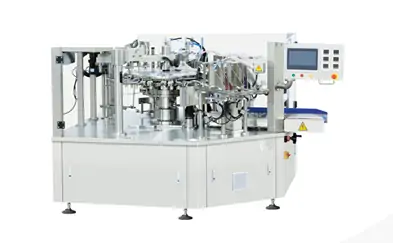
| Bag Width Range | 80-240 mm | Weight | 1500 kg |
| Bag Length Range | 150-370 mm | Total power | 3.02 kw |
| Filling weight | ≤ 1500g | Compress air | ≥ 0.4 m³/min |
| Max Speed | ≤ 60 bags/min | Dimensions | 1860 mm*1520 mm*1550 mm |


Walk the aisles of any major packaging trade fair today, and you will hear the same refrain: the next competitive edge is not just mechanical speed, but digital intelligence. The rotary premade pouch category—long defined by cam-driven precision and servo repeatability—is now absorbing a new layer of technology. Artificial intelligence is moving from a conference-room buzzword to a practical tool that changes how these lines inspect, adjust, and learn.
The shift matters because the demands on pouch packaging have never been higher. Smaller batch sizes. Thinner, more sustainable film structures that behave differently under heat. Labour shortages that make every minute of unplanned downtime hurt more than they used to. AI won't replace the mechanical engineering that makes a rotary system run at 60 or 80 cycles per minute, but it is starting to answer a question that mechanical precision alone cannot: what happens when conditions change?
Conventional vision systems on rotary fillers check for cap presence, date code legibility, and seal integrity using threshold-based algorithms. An operator sets a pass/fail boundary—say, a seal width must fall between 0.5 mm and 1.5 mm—and every pouch outside that window gets rejected. The system works, but it is brittle. A change in film opacity, ambient light, or print registration can suddenly push good pouches into the reject bin, generating waste that is invisible to the operator until someone notices the rising scrap rate.
AI-based visual inspection uses models trained on thousands of images of both acceptable and defective pouches. These models learn the natural variation that exists in a running line and can distinguish between a harmless shift in print colour and an actual seal defect. According to the VDMA (German Mechanical Engineering Industry Association), machine vision with deep learning capability can reduce false reject rates by up to 50% compared to rule-based systems in comparable inspection tasks. For a line producing 80 pouches per minute, halving false rejects translates to thousands of pouches saved per shift—each one representing material, fill product, and production time that did not need to be scrapped.
The learning capability also means the system improves over time. When an operator flags a new type of defect—a subtle crease near the zipper that traditional thresholding misses—the model can be retrained with those examples, and the entire line becomes more accurate without a mechanical adjustment. Exploring vision-guided pouch inspection systems with adaptive defect recognition can show how this capability is being integrated directly into rotary equipment.
Rotary fillers contain dozens of moving components operating in synchrony: gripper chains, filling nozzles, sealing jaws, cooling stations. Condition monitoring has been available for years—vibration sensors, temperature probes—but the data was largely reactive. A bearing temperature exceeded a threshold, an alarm triggered, and the maintenance team scrambled.
AI shifts the approach from condition-based to genuinely predictive. By analysing the pattern of subtle changes—a gradual increase in gripper motor current draw over weeks, a slight shift in the vibration signature of a sealing jaw actuator—a trained model can estimate the remaining useful life of a component. Operators receive a maintenance recommendation during a planned changeover window rather than an alarm at 2 a.m. on a Saturday. Research published by the International Society of Automation indicates that predictive maintenance strategies can reduce unplanned downtime by 30% to 50% and lower maintenance costs by 20% to 30% compared to reactive approaches.
For a rotary filling operation, the benefit compounds. A single unexpected stop can disrupt not just the filler but the upstream pouch feeding system and downstream cartoning or case packing equipment. Keeping the rotary unit running predictably stabilises the entire packaging hall. When evaluating equipment built for data-driven maintenance, looking at rotary filling platforms with integrated condition monitoring and AI analytics provides insight into how sensor data translates to operational decisions.
Sustainable packaging trends are pushing more converters toward mono-material films, recyclable structures, and thinner gauges. These materials are less forgiving than the multi-layer laminates they replace. A sealing jaw temperature that worked perfectly for a PET/PE laminate may over-seal a mono-PE pouch, creating wrinkles or even burn-through. Humidity swings during a summer afternoon shift can further shift the sealing window.
Traditional control systems rely on a fixed recipe: a set temperature, pressure, and dwell time stored in the machine's memory. If the result drifts out of tolerance, an operator adjusts the recipe manually. AI-based adaptive control takes a different approach. It continuously reads output variables—seal strength as inferred from jaw-closing force profiles, for example—and makes micro-adjustments to the process parameters to keep the seal within the target range even as film properties or ambient conditions change.
This capability is particularly valuable for co-packers who run different customers’ films on the same machine. Instead of dialling in each material through trial and error, the control system builds a dynamic model that adjusts sealing parameters in real time. Early adopters in food packaging have reported reductions in seal-related waste of 15% to 25% after implementing adaptive control, based on data shared at industry conferences. For operations handling multiple film types, rotary pouch filling and sealing equipment with adaptive process intelligence can illustrate how process tuning is moving from manual to automated.
Every format changeover on a rotary line—from a stand-up pouch with a spout to a flat pouch with a zipper—requires mechanical adjustments and a period of fine-tuning. A digital twin, which is a real-time simulation of the physical machine, allows production engineers to test the new pouch format virtually before making any physical changes. They can simulate the gripper timing, the fill nozzle trajectory, and the sealing jaw profile on a screen, identify collisions or timing conflicts, and generate the updated recipe parameters offline.
When the virtual commissioning is complete, the settings are uploaded to the physical machine, significantly compressing the changeover window. The concept has been validated in automotive and electronics manufacturing for years, and packaging machinery builders are now adopting it. The payoff is not just faster changeovers but also fewer scrapped pouches during the initial run. If your co-packing operation switches formats multiple times per week, seeking out automated rotary pouch systems with digital twin support and rapid changeover capability can help you understand how much downtime reduction is achievable.
AI capabilities do not arrive as a standalone feature you can order from a catalogue. They come embedded in specific subsystems: the vision inspection unit, the drive and motion controller, the HMI analytics dashboard. When you evaluate new rotary packaging equipment, the conversation should go beyond strokes per minute and maximum pouch width. Ask your potential suppliers:
Does the vision system use deep learning models that can be retrained on my specific pouch styles?
Can the machine collect and export sensor data in an open format that my plant's analytics platform can ingest?
Is predictive maintenance limited to alarms, or does it provide an estimated time-to-failure for critical wear components?
How are new film types commissioned—through manual recipe tuning or through an adaptive learning cycle?
These questions reveal whether a machine is truly designed for data-driven operation or whether the term “smart” is being used loosely. The rotary pouch filling market is moving steadily toward intelligence-driven packaging. Getting clarity on these points now helps you invest in a line that will remain competitive as film materials evolve and labour availability tightens.
REZPACK, as a manufacturer focused on rotary premade pouch filling and sealing technology, continues to integrate advanced automation and control features that support this transition. Discover how REZPACK engineers rotary pouch systems for today’s intelligent packaging environments and see the specific ways modern control architectures can make your line more adaptive.
Disclaimer: The performance figures and improvement percentages cited in this article are drawn from publicly available industry research, including publications from VDMA and the International Society of Automation, as well as presentations at packaging industry technical conferences. Actual results will vary based on machine configuration, product characteristics, operating conditions, and the specific AI implementation. Readers should verify all claims with equipment suppliers and conduct their own evaluation.
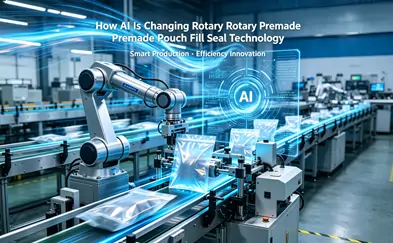
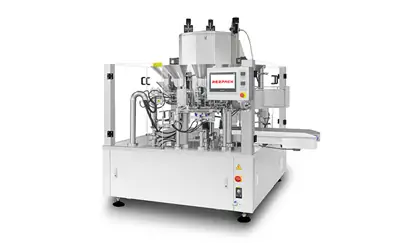
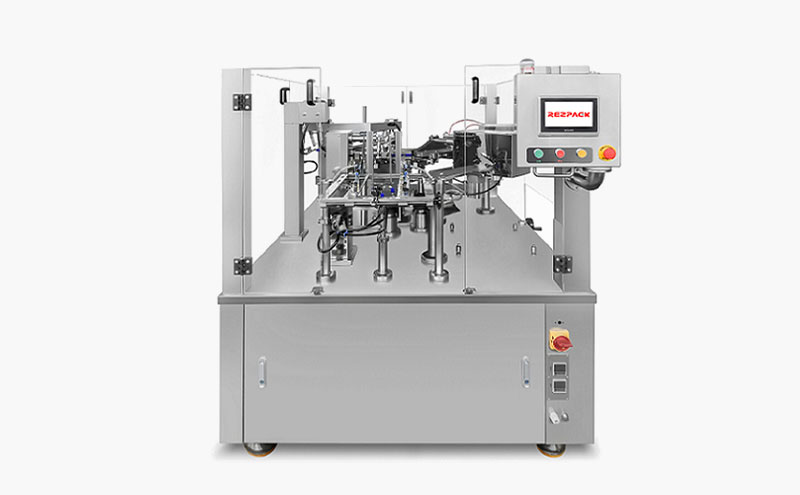
| Bag Width Range | 80-240 mm | Weight | 1500 kg |
| Bag Length Range | 150-370 mm | Total power | 3.02 kw |
| Filling weight | ≤ 1500g | Compress air | ≥ 0.4 m³/min |
| Max Speed | ≤ 60 bags/min | Dimensions | 1860 mm*1520 mm*1550 mm |
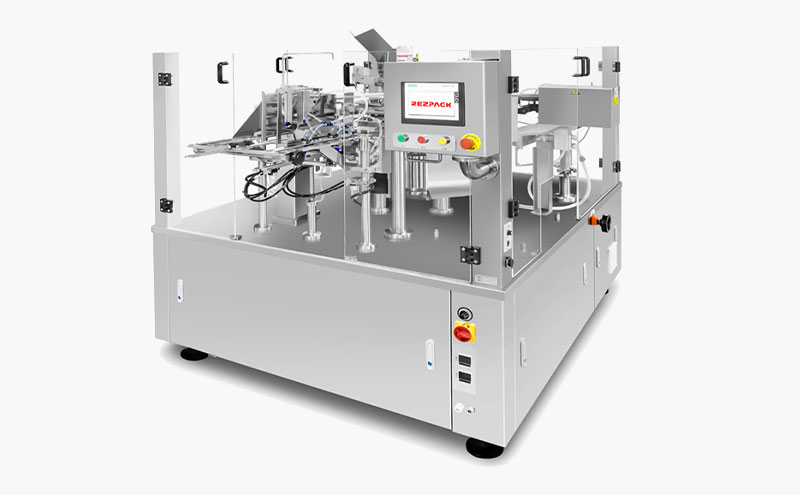
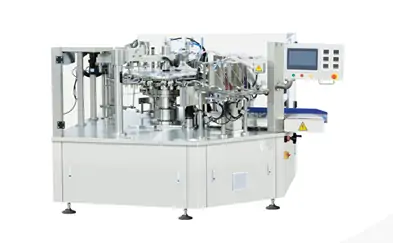
| Bag Width Range | 180-300 mm | Weight | 1800 kg |
| Bag Length Range | 150-450 mm | Total power | 3.62 kw |
| Filling weight | ≤ 2500 g | Compress air | ≥ 0.4 m³/min |
| Max Speed | ≤ 50 bags/min | Dimensions | 2080 mm*1720 mm*1650mm |
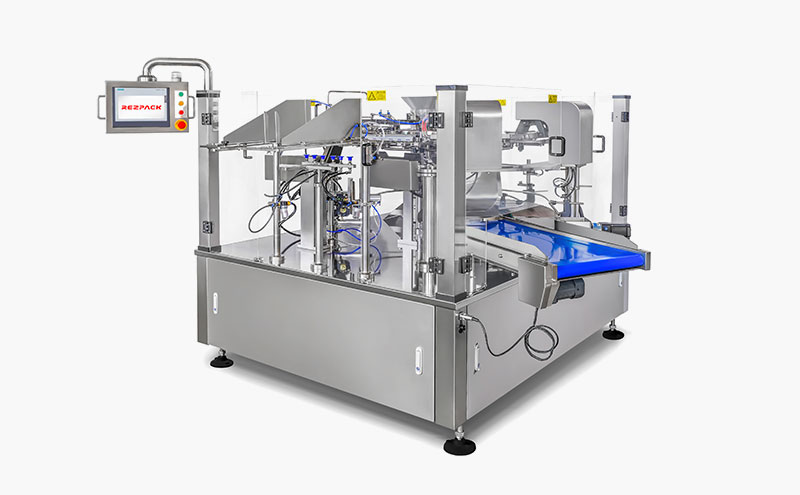
| Bag Width Range | 270-400 mm | Weight | 2500 kg |
| Bag Length Range | 150-600 mm | Total power | 3.62 kw |
| Filling Range | ≤ 5000g | Compress air | ≥ 0.4 m³/min |
| Max Speed | ≤ 30 bags/min | Dimensions | 2150 mm*2020 mm*1700 mm |