


 English
 Pусский
| Bag Width Range | 80-240 mm | Weight | 1500 kg |
| Bag Length Range | 150-370 mm | Total power | 3.02 kw |
| Filling weight | ≤ 1500g | Compress air | ≥ 0.4 m³/min |
| Max Speed | ≤ 60 bags/min | Dimensions | 1860 mm*1520 mm*1550 mm |


Choosing the right packaging machinery often feels like solving a complex puzzle. You need speed, reliability, and a system that integrates seamlessly into your existing production line. For many operations, the central question comes down to the configuration of the pouch packing machine: should the machine move in a circle or a straight line?
For operations managers and plant directors, this decision impacts downtime, maintenance costs, and overall throughput. This guide provides a practical, head-to-head comparison of rotary and horizontal premade pouch packing systems to help you make an informed choice.
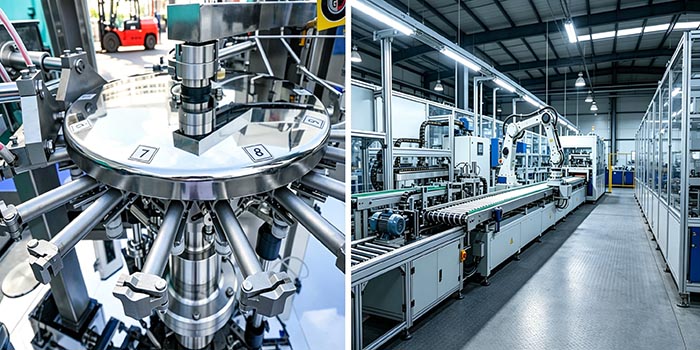
At their heart, the fundamental difference lies in how the machine handles the pouch during the filling process.
Horizontal Machines: These systems use a linear path. The pouch moves along a straight horizontal track, stopping at each station. Think of it like an assembly line where the product pauses at each step before moving to the next.
Rotary Machines: In this design, pouches are attached to a rotating carousel. The carousel spins continuously, and all the operations are performed while the pouch is in motion. The process never stops; it’s a seamless, high-speed flow.
This fundamental difference in motion dictates every other aspect of their performance, from speed to reliability.
Let's break down how these two systems perform across the critical metrics that matter to your bottom line.
This is the most significant differentiator. Horizontal machines operate intermittently. The machine must stop and start for each pouch, creating a natural speed limit.
Horizontal: Typically operates at 30-60 pouches per minute. Ideal for smaller production runs or when frequent changeovers are needed.
Rotary: The continuous motion allows for much higher speeds, easily reaching 80-120 PPM and beyond for standard pouch sizes. There is no “stop and start,” which reduces cycle time significantly.
If your production forecasts require high-volume output, the speed advantage of a rotary system is compelling.
How often do you change pouch sizes or product types? The answer here heavily influences your choice.
Horizontal: Generally offers faster and simpler changeovers. Many components are tool-less or require minimal adjustments. This makes horizontal systems a favorite for co-packers or lines running multiple SKUs in a single day.
Rotary: Changeovers are more complex, often requiring more time and technical skill due to the synchronized, continuous motion. However, modern rotary machines often feature servo-driven adjustments that can store recipes, reducing changeover time significantly.
Consistent seal quality is non-negotiable for product freshness and safety.
Rotary: Because the pouch is held securely in the carousel throughout the entire process, the registration and alignment for sealing are exceptionally precise. This continuous, controlled handling often results in superior seal integrity, especially for large or heavy pouches.
Horizontal: Pouch handling is also reliable, but the start-stop motion can sometimes create more vibration or pouch sway, potentially affecting precision on very lightweight or tall pouches.
Factory floor space is a premium asset.
Horizontal: These are linear machines. The required floor space is directly related to the number of stations. Longer machines with more stations can become quite long.
Rotary: These systems are much more compact. A rotary system’s circular design packs many functions into a smaller footprint. For the same number of stations, a rotary machine will almost always take up less floor space.
Here’s a simple guide to help you map your needs to the right technology.
| Feature | Horizontal (Intermittent) | Rotary (Continuous) |
|---|---|---|
| Speed | Low to Medium | High |
| Footprint | Larger | Compact |
| Changeover | Fast & Simple | Complex, but can be automated |
| Pouch Size Range | Very wide | Wide, but excels with larger pouches |
| Seal Integrity | Good | Excellent |
| Best For | Small batches, many SKUs, R&D lines | High-volume production, stable product mix |
| Initial Investment | Lower | Higher |
Don't just look at the price tag. Calculate the total cost of ownership. A horizontal machine might have a lower upfront cost, but if your volume doubles in two years, you will face costly downtime or a premature replacement. A rotary machine is a larger initial investment, but its speed and reliability can provide a dramatically lower cost per pouch at high volumes.
Consider these two scenarios:
Scenario A: You run a specialty food company with 20 different pouch sizes. Production runs are 2,000-5,000 pouches per batch, with 3-4 changeovers per day. Flexibility is your top priority.
Scenario B: You produce a popular laundry detergent pod. You run two SKUs 24/7, with volumes exceeding 1 million pouches per week. Your priority is maximizing uptime and minimizing labor cost per unit.
Which scenario mirrors your operation? For operations in Scenario B, exploring a high-speed solution is the logical next step. You can click here to learn about a range of advanced rotary pouch packing solutions designed for continuous, high-throughput environments.
Regardless of the machine’s motion—rotary or horizontal—the core mechanism that provides reliability is the “pick, fill, seal” sequence. This automated process picks a premade pouch from a magazine, opens it, fills it with the product, and seals it. The sophistication of this sequence varies. A basic horizontal machine might use a simple vacuum pickup, while a high-end rotary system often uses a servo-driven rotary pick-and-place mechanism for extreme precision and speed.
(https://youtu.be/Gi4PqlXa9YI?si=oDSAXeDgBW003_fd)
For many production managers, the question isn’t just "rotary or horizontal?" but also "how can I get rotary-level speed without a massive capital expense?" Newer, modular designs are starting to bridge this gap, offering hybrid approaches. To see the specific configurations and technical specs of modern, high-efficiency models, you can visit this product page for detailed technical specifications.
There is no single "best" machine. The right choice is the one that aligns with your production volume, flexibility needs, and long-term business goals.
Choose a horizontal machine for versatility, quick changeovers, and as an entry-level solution for lower volumes.
Choose a rotary machine for high-speed, continuous production, a compact footprint, and the highest standards of seal integrity.
Getting the selection right is critical for your operational efficiency. If your analysis points toward the speed and reliability of a rotary configuration, or if you’re still weighing the options for your specific product, a deeper look at proven machinery is valuable. You can get expert selection advice and explore Rezpack's rotary system options here to see if they fit your line’s requirements.
This detailed comparison should provide a clear roadmap. The final step is to match these technical differences with the realities of your production floor, your growth forecasts, and your total cost of ownership targets.
Note: The images in this article are for reference only.
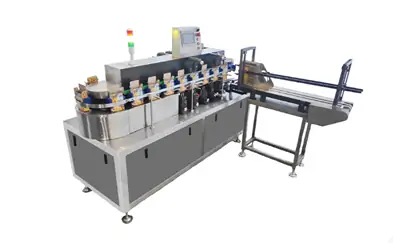
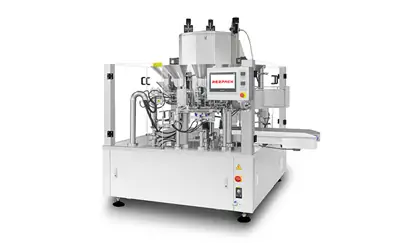
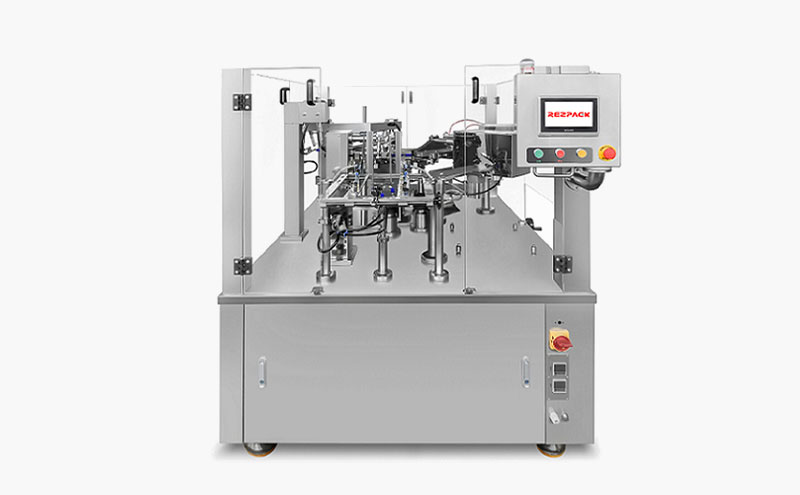
| Bag Width Range | 80-240 mm | Weight | 1500 kg |
| Bag Length Range | 150-370 mm | Total power | 3.02 kw |
| Filling weight | ≤ 1500g | Compress air | ≥ 0.4 m³/min |
| Max Speed | ≤ 60 bags/min | Dimensions | 1860 mm*1520 mm*1550 mm |
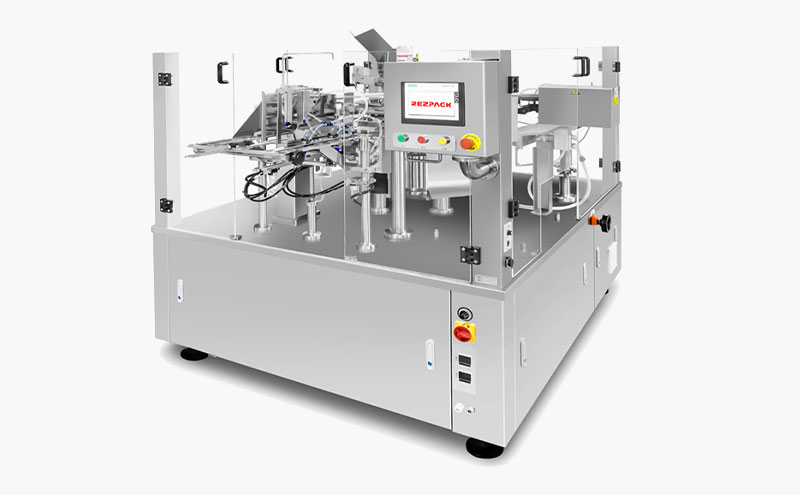
| Bag Width Range | 180-300 mm | Weight | 1800 kg |
| Bag Length Range | 150-450 mm | Total power | 3.62 kw |
| Filling weight | ≤ 2500 g | Compress air | ≥ 0.4 m³/min |
| Max Speed | ≤ 50 bags/min | Dimensions | 2080 mm*1720 mm*1650mm |
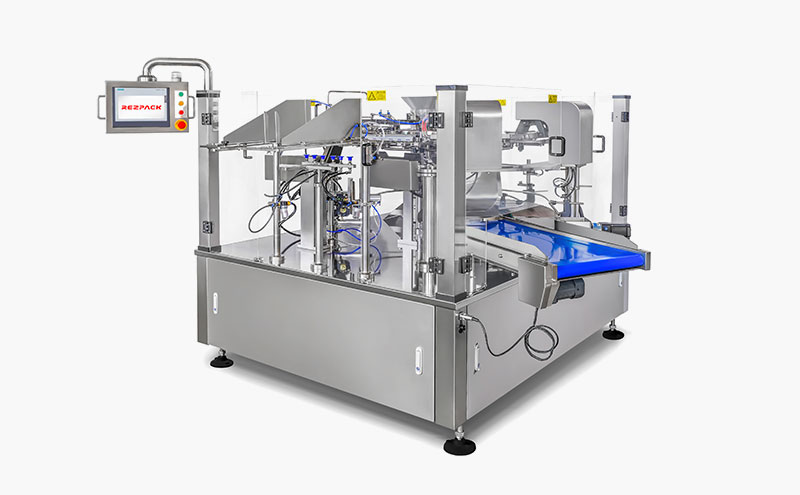
| Bag Width Range | 270-400 mm | Weight | 2500 kg |
| Bag Length Range | 150-600 mm | Total power | 3.62 kw |
| Filling Range | ≤ 5000g | Compress air | ≥ 0.4 m³/min |
| Max Speed | ≤ 30 bags/min | Dimensions | 2150 mm*2020 mm*1700 mm |