


 English
 Pусский
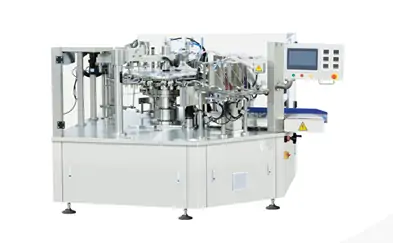
| Bag Width Range | 80-240 mm | Weight | 1500 kg |
| Bag Length Range | 150-370 mm | Total power | 3.02 kw |
| Filling weight | ≤ 1500g | Compress air | ≥ 0.4 m³/min |
| Max Speed | ≤ 60 bags/min | Dimensions | 1860 mm*1520 mm*1550 mm |


The production manager’s voice was tense. “Our upstream filler runs at 100 units per minute, but our bagging line maxes out at 45. We’re building inventory all day and shipping nothing.”
That phone call happens every week. A packaging line that can’t keep up with the rest of the factory creates a costly bottleneck. Adding a second shift helps, but that doubles labor cost. Adding a second machine doubles floor space and maintenance.
The real solution lies in understanding why intermittent motion machines hit a speed wall—and what continuous motion technology does differently.
Conventional pick-fill-seal machines use stop-and-go indexing. The pouch moves to a station, stops, the operation happens, and then it moves again. This works perfectly at 30–50 cycles per minute. But above 55, physics intervenes.
Every stop creates inertia. Pouches tip over. Films stretch. Sealing bars must dwell longer than the machine allows. The result: misfeeds, wrinkled seals, and constant operator intervention.
According to data from packaging equipment audits, nearly 70% of intermittent-motion lines running above 50 BPM experience at least one jam per hour. That doesn’t show up on the spec sheet.
Instead of stopping for each operation, a continuous rotary platform keeps pouches moving through a carousel. Pick, open, fill, and seal happen while the pouch travels in a smooth circular path.
The benefits multiply at higher speeds:
No start-stop shock means pouches stay upright
Sealing bars rotate with the pouch, providing consistent dwell time regardless of speed
Vacuum and gas flush cycles happen during travel, not after stopping
One pet treat manufacturer documented the switch: their old linear line averaged 48 bags per minute with 12% rejects. After moving to a continuous rotary design, they sustained 112 bags per minute with under 2% rejects. The same operators ran both lines.
Even with the right machine type, speed killers hide in plain sight. Here are the most common ones we’ve seen across dozens of packaging floors.
At high speeds, film tension becomes critical. If the machine uses friction alone to advance the web, slippage causes off-registration prints and uneven seals.
Fix: Look for servo-driven film pull systems with closed-loop tension control. These adjust in real time, maintaining perfect registration even during acceleration and deceleration. Some advanced systems store tension profiles for different film types—nylon, polyester, or laminate.
A machine that runs 120 BPM for one hour, then takes 45 minutes to switch pouch size,s delivers an effective speed far below its rating. Changeover time is the hidden thief of overall equipment effectiveness (OEE).
Fix: Prioritize machines with recipe storage and motorized adjustments. Modern rotary platforms can store 50+ pouch recipes and complete size changes in under 10 minutes. One cheese packaging plant reduced its daily changeover time from 2.5 hours to 35 minutes by adopting this feature.
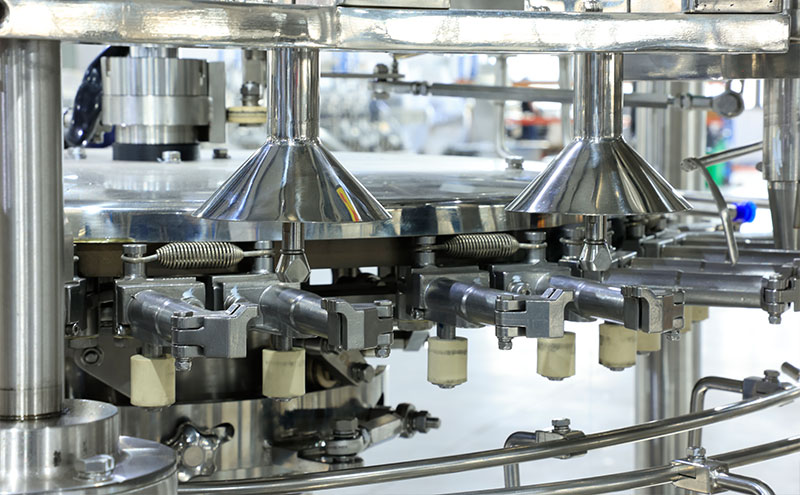
Every jam stops production. But the real cost is how long it takes to clear. Machines with difficult access—guards that require tools, sealing areas buried behind panels—turn 30-second jams into 10-minute stoppages.
Fix: Evaluate tool-less access. Can the operator open the guarding with one motion? Are sealing bars visible and reachable without disassembly? According to maintenance logs, machines with full tool-less access reduce jam clearance time by an average of 70%.
Reaching 120 bags per minute isn’t just about the machine. It requires coordination across four components:
| Component | Requirement for 120 BPM |
|---|---|
| Pouch infeed | Continuous magazine with automatic splicing |
| Filler integration | Volumetric or multi-head weigher that discharges within 0.5 seconds |
| Vacuum system | High-flow pump capable of 99% evacuation in <1.5 seconds |
| Sealing system | Constant temperature control with 0.5°C accuracy |
Missing any of these creates a new bottleneck elsewhere. A rotary premade pouch pick fill seal machine running at 120 BPM demands that every upstream and downstream element is synchronized.
For a detailed breakdown of how to match filler speed and vacuum capacity to target output, [refer to this speed-matching technical reference].
A frozen vegetable packer approached us with a familiar problem. Their existing line topped out at 55 BPM because the linear indexing machine couldn’t handle the weight of 2-pound frozen bags. Bags toppled during stops, and the operator spent half the shift picking up fallen pouches.
After evaluating continuous rotary designs, they installed a system with servo-driven pick-and-place and a 10-station carousel. The results after 90 days:
Sustained output: 115 BPM (averaged over full shifts)
Reject rate: 1.7% (down from 9.2%)
Operator fatigue complaints: nearly eliminated
The payback period? Eleven months, based on labor savings and reduced film waste alone.
To calculate your own potential payback at different speed targets, [download this ROI calculation worksheet].
Myth: “Faster machines require more skilled operators.”
Fact: Modern rotary platforms with intuitive touchscreens often require less training because they automate tension, timing, and registration. One bakery chain reduced training time from 40 hours to 8 hours after switching.
Myth: “High speed means higher film waste.”
Fact: Continuous motion actually reduces waste because there’s no start-stop film snapping. Many users report 15-25% less film waste at 100+ BPM compared to intermittent lines at 50 BPM.
Myth: “You need a new facility to run Rotary.”
Fact: Rotary machines have a much smaller footprint per output than linear designs. A 120 BPM rotary system often occupies less floor space than a 50 BPM linear system.
Before investing in any high-speed solution, follow this three-step validation process:
Calculate your true required speed. Don’t just use peak demand. Look at sustained hourly rates over a full week. Add 20% for growth and downtime.
Test with your actual film and product. Watch the machine start cold, run for an hour, and go through a changeover. Bring your most difficult pouch size.
Interview existing users. Ask about spare parts lead times, software reliability, and what they wish they’d known before buying.
Speed alone isn’t the goal. Consistent, reliable speed with low waste and happy operators—that’s the real win. If your current packaging line is holding back your production, the technology to reach 120 BPM exists today.
To see how different rotary configurations compare on changeover speed, film waste, and real-world uptime, [browse detailed specifications and case summaries].
What’s your current bottleneck—film handling, filler speed, or sealing reliability? The answer might point you toward a very different solution than you expected.
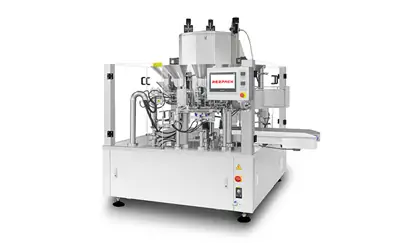
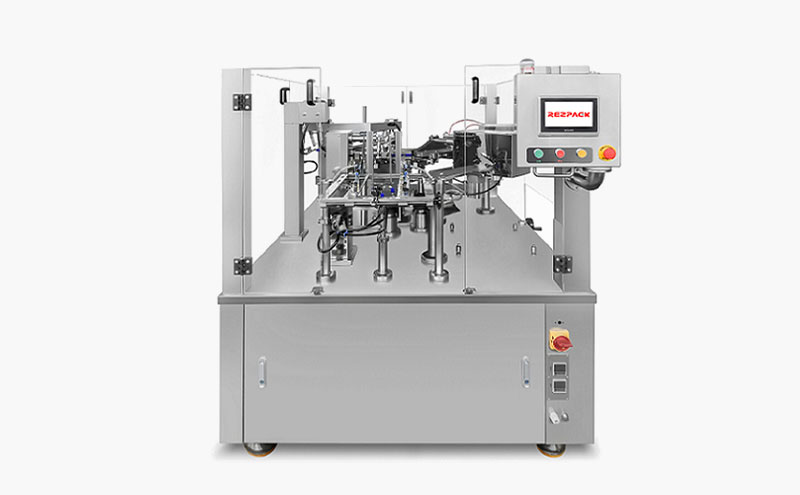
| Bag Width Range | 80-240 mm | Weight | 1500 kg |
| Bag Length Range | 150-370 mm | Total power | 3.02 kw |
| Filling weight | ≤ 1500g | Compress air | ≥ 0.4 m³/min |
| Max Speed | ≤ 60 bags/min | Dimensions | 1860 mm*1520 mm*1550 mm |
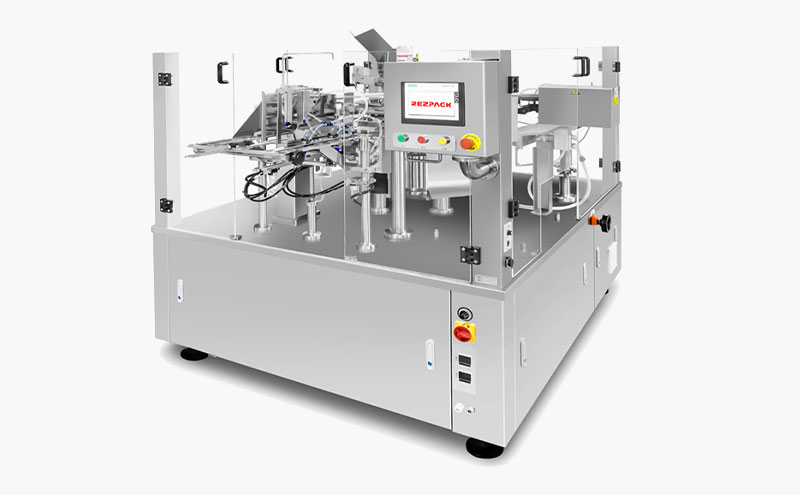
| Bag Width Range | 180-300 mm | Weight | 1800 kg |
| Bag Length Range | 150-450 mm | Total power | 3.62 kw |
| Filling weight | ≤ 2500 g | Compress air | ≥ 0.4 m³/min |
| Max Speed | ≤ 50 bags/min | Dimensions | 2080 mm*1720 mm*1650mm |
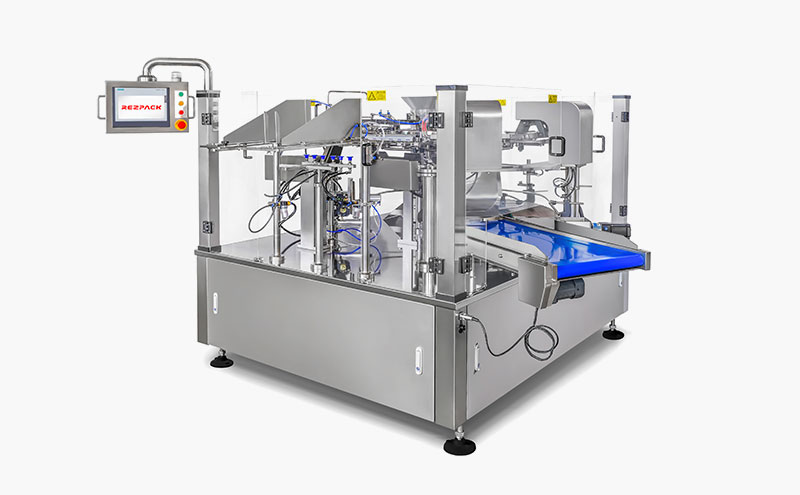
| Bag Width Range | 270-400 mm | Weight | 2500 kg |
| Bag Length Range | 150-600 mm | Total power | 3.62 kw |
| Filling Range | ≤ 5000g | Compress air | ≥ 0.4 m³/min |
| Max Speed | ≤ 30 bags/min | Dimensions | 2150 mm*2020 mm*1700 mm |