


 English
 Pусский
 Español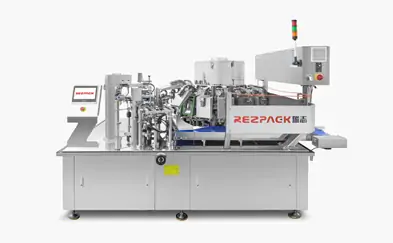
| Bag Width Range | 80-240 mm | Weight | 1500 kg |
| Bag Length Range | 150-370 mm | Total power | 3.02 kw |
| Filling weight | ≤ 1500g | Compress air | ≥ 0.4 m³/min |
| Max Speed | ≤ 60 bags/min | Dimensions | 1860 mm*1520 mm*1550 mm |


If you have spent any time on a packaging floor, you already know this: intermittent stop-and-go machines eat up precious seconds. So how do factories producing thousands of stand-up pouches per shift keep things moving without constant delays? The answer lies in a continuous motion platform. Instead of processing one bag at a time in a straight line, a rotary design spins each pouch through multiple stations in a seamless loop—loading, printing, opening, filling, sealing, and discharging without ever stopping to catch its breath. Premade pouch packer built on this principle typically runs 30 to 80 bags per minute, while higher-end configurations push beyond 120, depending on product type and pouch size.
Behind those numbers is a reality many buyers overlook until the machine arrives on their dock: rotary designs trade simplicity for throughput. The trade-off becomes obvious once you understand what happens inside the turret. Let’s walk through exactly where your pouch goes and why each motion matters.
A standard 8-station rotary configuration has become the industry baseline for good reason. It balances speed with enough flexibility to handle different pouch types, from flat pouches to gusseted stand-up pouches with zippers or spouts. Here is how it actually works, station by station.
A stack of empty bags sits in the bag magazine. Vacuum suction cups pull the bottom pouch away from the stack while pneumatic grippers clamp onto its top edge. The rotating turret then indexes the pouch to the next position. If the pick-up fails here, nothing else works. This is why reliable vacuum systems and properly maintained suction cups matter more than marketing brochures admit. Worn cups or misaligned stacks cause pouch feeding problems that ripple through every subsequent station.
Once clamped, the bag receives its date coding, batch information, or branding at this position. Thermal transfer, inkjet, or laser printers apply the marks while the pouch is still flat and empty. Printing before filling seems counterintuitive until you have tried printing on a bulging, product-filled bag when the surface is uneven and misalignment is guaranteed. This placement is not random—it is deliberate engineering.
Two rows of suction cups grab opposite sides of the pouch mouth while a brief air jet blows into the bag. The grippers then pull open the top, fully exposing the interior. For zipper pouches, mechanical fingers also separate the interlocking tracks. If the bag fails to open correctly—say, the material sticks due to humidity or static electricity—a photo eye detects the error. The machine skips filling and sealing for that cycle entirely. That small sensor prevents massive product spills across your floor.
Now the bag is open and stable under the filler. What happens next depends entirely on what you are packaging. Multi-head weighers handle granules like nuts or pet food. Auger fillers meter powders such as coffee or protein mixes. Piston pumps move liquids and pastes. For solids that settle unevenly, a settling device vibrates the pouch to distribute contents before sealing. The accuracy target ranges from ±0.5% to ±2%, with modern servo-driven systems regularly hitting the tighter end of that scale.
Not every product fits neatly into four stations. Two-stage filling handles high-volume or dual-component products—think soups that need liquid and solids distributed evenly. Extra stations can also accommodate gas flushing to extend shelf life for oxygen-sensitive items like coffee or nuts. Some configurations reserve a station for deflation, removing air before the seal bar closes to produce a flatter, denser package.
Heat seal bars press against the top of the pouch, using controlled temperature and pressure to bond the inner sealant layers of the bag material. Seal temperature typically ranges from 130 to 200 degrees Celsius depending on laminate composition. If the seal is too cold, the bond fails; too hot, the material melts through. The margins are narrower than you think.
Many machines run a second sealing pass to reinforce the seam or run a cooling bar over the freshly bonded material to flatten and set the seal. A final checkweigher or metal detector may sit downstream, catching defects before bags reach your case packer. A single rotary line can integrate directly with downstream checkweighers, X-ray inspection units, or cartoning equipment without manual unloading.
Intermittent machines stop at every station. The bag sits still, the filler cycles down, the seal bars press, then everything waits for the next index. Rotary machines never stop. The turret spins continuously. Each station completes its task as the bag passes through. That difference directly translates into throughput. A typical rotary system achieves 15 to 30 percent higher OEE than indexed machines of similar complexity because motion is constant start-and-go.
But constant motion also demands precise servo controls. A rotary design with sloppy indexing or inconsistent pneumatic pressure will jam just as often as any intermittent machine. Speed alone is worthless if you are clearing pouch jams every twenty minutes. The difference between a smooth-running rotary line and a headache is hidden in the timing cam and vacuum systems that most buyers only discover after installation.
Not every packaging scenario benefits from a rotary platform. If you are running a vertical form fill seal (VFFS) system that forms bags directly from roll stock, you eliminate the cost of pre-made pouches entirely. VFFS machines typically run 60 to 120 bags per minute and produce roughly 20% less film waste because the bag forms precisely around your product, not from a pre-cut inventory. The upfront cost of VFFS equipment, however, often runs 30 to 50% higher than a comparable premade pouch filler, making ROI calculations highly volume-dependent.
For businesses committed to high-end branded packaging—stand-up pouches with zippers, spouts, or premium print designs—relying on roll stock film is not an option. Those features must be pre-manufactured anyway. The packaging market valued at USD 12.6 billion in 2025 reflects this reality. Similarly, if your pouches include reclosable zippers or spouts, a properly configured automated bagging machine is not optional—it is the only way to keep line speeds viable.
Smaller operations sometimes ask whether an inline filling system could work instead. Inline layouts move pouches sequentially through stations in a straight line, stopping at each position. They require less upfront investment and simplify maintenance access. But rotary systems offer more compact floor layouts and higher throughput. For medium-volume production of sensitive liquids or products requiring precise handling, inline may win. For high-volume continuous runs, rotary is the industry default for good reason.
Here is where most buyers trip up. The basic station sequence—load, code, open, fill, seal, discharge—is nearly identical across manufacturers. The differences show up in the details that affect operators every shift.
Changeover time separates good machines from frustrating ones. Swapping from a 200mm pouch to a 150mm pouch should take 10 to 15 minutes, not 45. Machines built with modular tooling and tool-free adjustment points dramatically reduce downtime between production runs, which matters when you run multiple bag sizes across the same line. The packaging industry has established safety frameworks such as ISO 12100 that govern general design principles for machinery safety, covering risk assessment and proper guarding of moving parts. Machines that follow these standards reduce operator injury exposure during changeovers and maintenance.
Pouch detection systems also vary widely. Basic models rely on mechanical feelers. Better designs use capacitive or photoelectric sensors that detect the presence of a correctly opened bag before allowing the filler to cycle. The difference in spillage rates is dramatic. Pouch opening failures that go undetected dump raw product directly into your conveyor system, creating cleanup headaches far beyond the cost of the lost material.
Recurring maintenance pain points also differ. Sealing bars wear. Suction cups degrade. Belts stretch. A machine designed with accessible wear parts and clear diagnostic readouts on its HMI costs less to keep running than a cheaper unit that requires partial disassembly for routine cleaning.
Standard configurations cover maybe 60% of what factories actually need. The other 40% is where customized pouching equipment makes or breaks your line.
Wet or sticky products demand different materials of construction. A liquid filler running tomato sauce needs different seals and wash-down protection than a dry auger handling protein powder. Dusty environments—think spice packing or powdered supplements—require covered filling zones and vacuum extraction at the seal bar to prevent “dirty seal” contamination as fine particles rise during filling. Machines built for clean rooms or aseptic applications add another layer of complexity entirely, with HEPA-filtered air over the filling zone and sterilizable surfaces throughout.
Spouted pouches with rigid fitments require grippers designed to accommodate specific diameters and cap orientations. Not every rotary machine supports this out of the box. The same applies to heavy-duty pouches containing dense products like frozen meat blocks—standard gripper designs may not provide enough clamping force to hold the pouch steady through all eight stations.
The ability to swap between multi-head weighers, auger fillers, and liquid piston pumps on the same rotary base matters enormously for contract packers or manufacturers running multiple product lines. Some machines handle this with a quick-change coupling and preset recipes stored in the controller. Others require a half-day teardown. That difference translates directly into utilization rates and ultimately into profitability.
Operators interact with these machines constantly during changeovers, clearing jams, and routine cleaning. Machines that follow ISO 12100 and ISO 13849 standards include properly guarded moving parts, accessible emergency stops, and control systems designed to fail safely rather than unpredictably. Compliance with EU Machinery Directive 2006/42/EC is a baseline for equipment sold in European markets, while US facilities must align with underlying general machinery safety regulations enforced by OSHA even without pouch-machine-specific rules. A safe machine is not a luxury—it is a requirement that affects insurance, liability, and morale on your production floor.
The decision to commit to full rotary automation comes down to one question: do your volumes justify continuous motion? If you are packing 15 to 20 bags per minute, a semi-automatic or inline machine may cost less and serve your needs adequately. But once you cross 40 bags per minute consistently across multiple shifts, the packaging line efficiency gains from a rotary platform become undeniable. The global push toward automated packaging solutions reflects this reality—labor savings of 30 to 40% and improved seal consistency approaching 99.3% make the investment math increasingly favorable as production scales.
For operations that demand shift-after-shift reliability without the per-pouch material waste of roll-stock systems, see the full solution overview here to compare station configurations and optional add-ons.
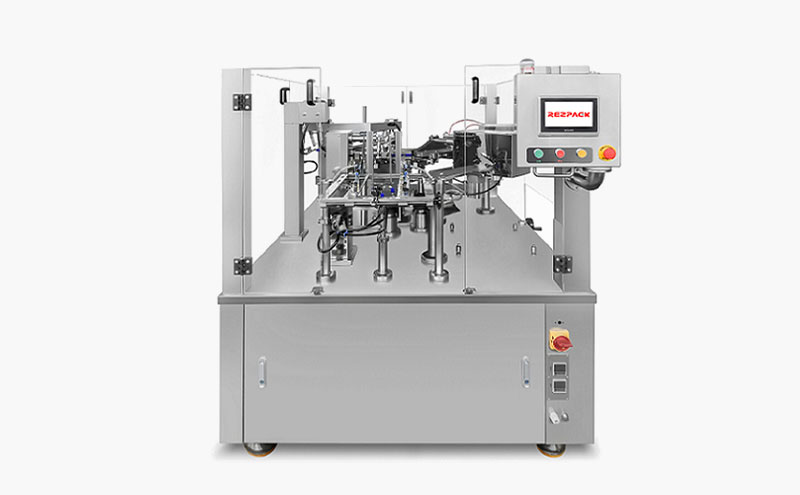
| Bag Width Range | 80-240 mm | Weight | 1500 kg |
| Bag Length Range | 150-370 mm | Total power | 3.02 kw |
| Filling weight | ≤ 1500g | Compress air | ≥ 0.4 m³/min |
| Max Speed | ≤ 60 bags/min | Dimensions | 1860 mm*1520 mm*1550 mm |
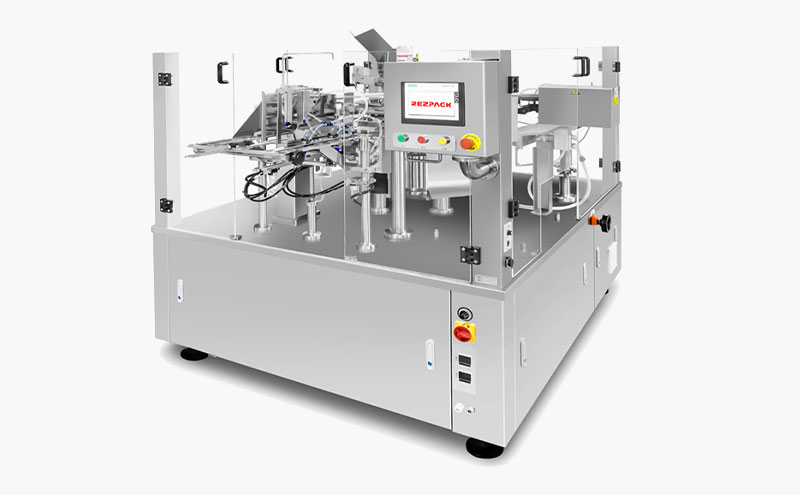
| Bag Width Range | 180-300 mm | Weight | 1800 kg |
| Bag Length Range | 150-450 mm | Total power | 3.62 kw |
| Filling weight | ≤ 2500 g | Compress air | ≥ 0.4 m³/min |
| Max Speed | ≤ 50 bags/min | Dimensions | 2080 mm*1720 mm*1650mm |
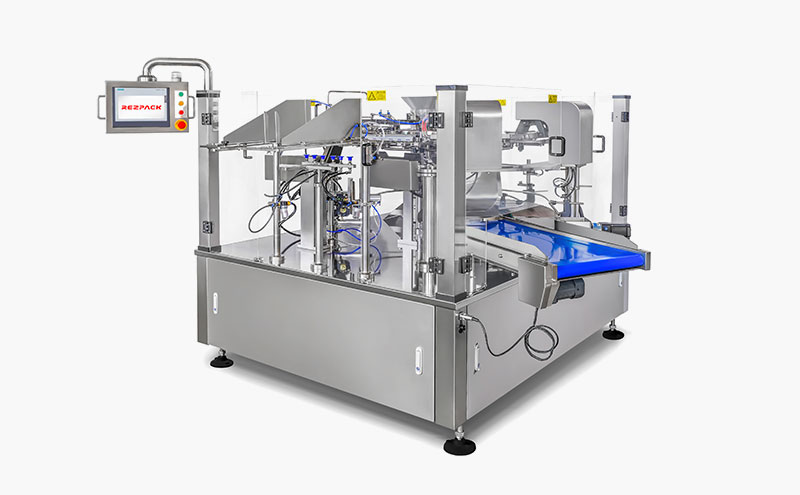
| Bag Width Range | 270-400 mm | Weight | 2500 kg |
| Bag Length Range | 150-600 mm | Total power | 3.62 kw |
| Filling Range | ≤ 5000g | Compress air | ≥ 0.4 m³/min |
| Max Speed | ≤ 30 bags/min | Dimensions | 2150 mm*2020 mm*1700 mm |