


 English
 Pусский
| Bag Width Range | 80-240 mm | Weight | 1500 kg |
| Bag Length Range | 150-370 mm | Total power | 3.02 kw |
| Filling weight | ≤ 1500g | Compress air | ≥ 0.4 m³/min |
| Max Speed | ≤ 60 bags/min | Dimensions | 1860 mm*1520 mm*1550 mm |


Rotary premade pouch machines are the gold standard for automated flexible packaging in industrial production, designed to fill and seal preformed pouches (stand-up pouches, zipper pouches, spout pouches, flat pouches, etc.). Their rotary mechanical design and integrated automation deliver a suite of competitive advantages that align with the high-efficiency, flexible, and high-quality packaging needs of food, beverage, cosmetics, chemicals, and pharmaceutical industries—core demands for global B2B manufacturing and packaging buyers. Below are their key benefits, tailored to industrial production and international market requirements:
The rotary turret structure enables continuous, synchronous operation of all workstations (pouch feeding, opening, filling, sealing, coding, discharge, etc.). Unlike reciprocating premade pouch machines (which have intermittent motion), rotary models eliminate idle time between process steps, achieving higher output speeds (typically 80–250 pouches per minute, depending on pouch size and material). For large-scale industrial production, this directly translates to higher throughput and lower unit packaging costs— a critical selling point for global manufacturers.
Rotary machines handle nearly all types of premade flexible pouches used in the global market, with minimal changeover:
The rigid rotary turret ensures stable, consistent positioning of pouches throughout the entire process, with precise control over:
Most modern rotary premade pouch machines feature a modular design with quick-release parts (pouch holders, filling nozzles, sealing dies) and digital parameter storage. Changing over for different pouch sizes (width/length) or formats takes only 10–30 minutes (no complex mechanical adjustments), supporting small-batch, multi-variety production—a growing demand in the global market as brands shift to customized, niche packaging for regional markets.
Rotary machines are easily integrated with auxiliary equipment to create a one-stop automated packaging line:
The rotary design delivers uniform pressure and heat distribution across the seal area, creating a strong, airtight, and moisture-proof seal—even for thick laminated pouches or pouches with zippers/spouts. A reliable seal prevents product spoilage, contamination, or leakage during international shipping and storage, extending product shelf life and reducing returns/complaints for exporters. All contact parts are made of food-grade 304/316 stainless steel, complying with global food safety and hygiene standards (FDA, CE, HACCP).
The rotary turret’s vertical, circular layout consolidates all workstations into a small footprint—30–50% less floor space than linear premade pouch machines of the same output. This is a major benefit for manufacturers with limited factory space (common in urban industrial areas of Europe, Asia, and North America) and simplifies factory layout and line integration.
Rotary machines feature a robust, precision-machined mechanical structure with fewer moving parts than reciprocating models, reducing wear and tear and lowering the risk of breakdowns. Most key components (bearings, motors, sensors) are international standard parts (e.g., Siemens, SMC, Omron) that are easily sourced globally—critical for overseas customers, who require convenient after-sales service and spare parts availability. Routine maintenance is simple (e.g., lubrication, filter replacement), with minimal downtime for repairs.
Beyond pouch versatility, these machines handle all types of packaging materials for premade pouches, including plastic laminates, aluminum foil laminates, and biodegradable/compostable films (a fast-growing trend in the EU, North America, and other eco-conscious markets). This aligns with global sustainability regulations and brand ESG goals, making rotary machines a future-proof investment for international manufacturers.
The continuous rotary motion has higher transmission efficiency than the start-stop motion of reciprocating machines, reducing energy consumption per unit output (typically 15–20% lower energy use). This lowers long-term production costs and meets the energy-saving and emission-reduction requirements of global industrial policies (e.g., the EU’s Energy Efficiency Directive).
For global B2B manufacturers and packaging solution providers, the core value of rotary premade pouch machines lies in their combination of high efficiency, flexibility, precision, and reliability—all while complying with international safety, sustainability, and quality standards. Their ability to support large-scale production and adapt to diverse regional packaging demands makes them the preferred choice for exporters and multinational brands looking to optimize their packaging lines for the global market.
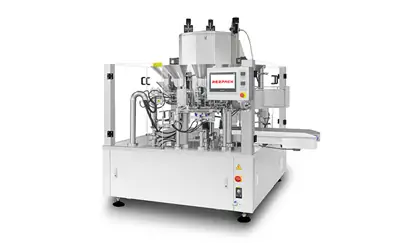
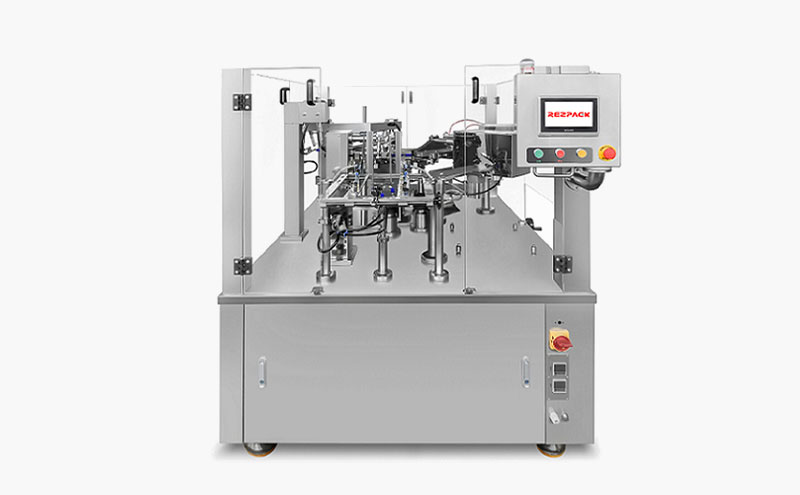
| Bag Width Range | 80-240 mm | Weight | 1500 kg |
| Bag Length Range | 150-370 mm | Total power | 3.02 kw |
| Filling weight | ≤ 1500g | Compress air | ≥ 0.4 m³/min |
| Max Speed | ≤ 60 bags/min | Dimensions | 1860 mm*1520 mm*1550 mm |
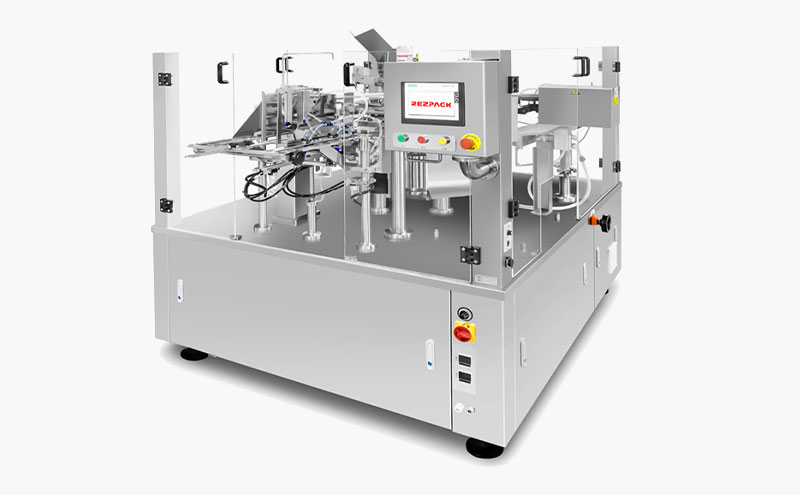
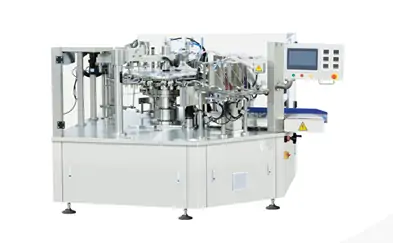
| Bag Width Range | 180-300 mm | Weight | 1800 kg |
| Bag Length Range | 150-450 mm | Total power | 3.62 kw |
| Filling weight | ≤ 2500 g | Compress air | ≥ 0.4 m³/min |
| Max Speed | ≤ 50 bags/min | Dimensions | 2080 mm*1720 mm*1650mm |
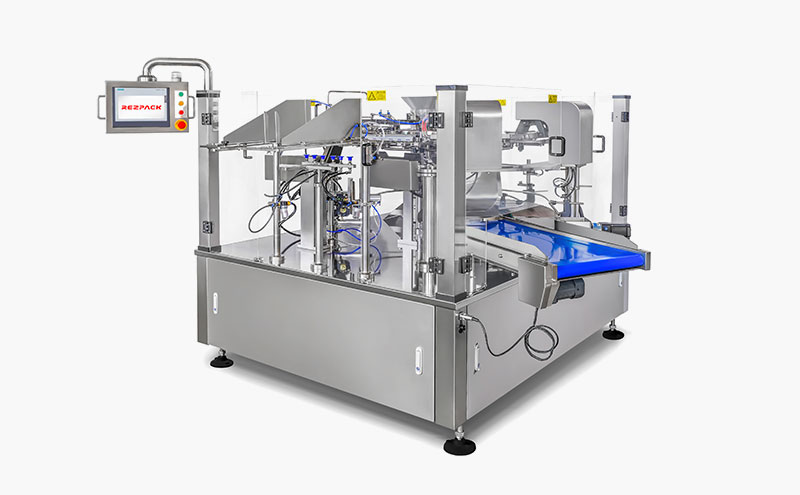
| Bag Width Range | 270-400 mm | Weight | 2500 kg |
| Bag Length Range | 150-600 mm | Total power | 3.62 kw |
| Filling Range | ≤ 5000g | Compress air | ≥ 0.4 m³/min |
| Max Speed | ≤ 30 bags/min | Dimensions | 2150 mm*2020 mm*1700 mm |